
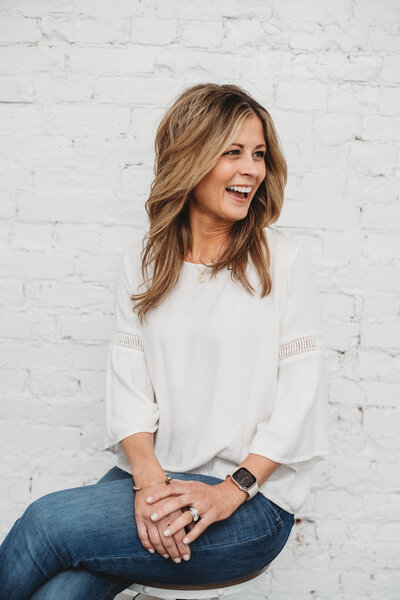


Nearly 40% of American mothers are now primary earners, but the culture hasn’t fully caught up with what that actually requires.

In this episode, I’m joined by Alexis Contos, founder of The Breadwinners, a community built around the realities of building a career while raising a family. Alexis shares why she walked away from a 20-year corporate career, how one dinner at South by Southwest turned into a growing movement, and what she’s learning about creating a different path for working mothers.
We also talk about guilt, ambition, integration, personal agency, and why we need to stop trying to do everything perfectly.
Show Highlights:
-
What Alexis was like growing up and how relationships shaped her. 02:30
-
Why Alexis left her 20-year corporate career without knowing what she’d do next. 07:10
-
How one dinner at South by Southwest became the beginning of The Breadwinners. 10:05
-
Why women showed up to the dinner and why they needed that community. 13:05
-
Why Alexis prefers “integration” over “balance.” 19:00
-
How Alexis defines a breadwinner as someone who brings important things into the home. 25:00
-
Why ambition is about aligning your time with your values. 27:15
-
How to replace guilt with confidence, agency, and community. 28:30
-
How Alexis structures her day to make space for both work and family. 34:00
-
Why aspiring breadwinners are joining the community and helping write a new playbook for working mothers. 38:00
Resources Mentioned:
Find Alexis on Substack (and get a discounted subscription) at: https://wearethebreadwinners.substack.com/738ea8e9
Find Alexis on Instagram at: https://www.instagram.com/wearethebreadwinners/
Learn more about The Breadwinners: https://thebreadwinners.co
To book an exploratory call and learn about coaching options: http://brilliant-balance.com/explorecoaching
Join The Coaching Circle to apply what you learn on the podcast with structure & support: https://brilliant-balance.com/coachingcircle
Subscribe for weekly content from Cherylanne straight to your inbox: https://brilliantbalance.substack.com/
Follow Cherylanne on Instagram: http://www.instagram.com/cskolnicki
Episode #463 – Full Transcript
Cherylanne Skolnicki:
My guest today, Alexis Contos, spent nearly 20 years building marketing organizations at some of the biggest names in tech and in venture, names you might recognize like Braintree, Square, SoftBank. And most recently, she was chief marketing officer at a venture firm, NEA. Then as a mother of four, she left that career to build something that didn’t exist yet, a real conversation about what it means to be a breadwinner and a mother at the very same time. It started with one dinner. In March of 2025, Alexis brought 30 women together at South by Southwest in Austin, founders, executives, and creatives who were all financially leading their families while trying to stay fully present within them. That single evening became The Breadwinners, a podcast, a Substack, a growing community built around a simple idea that nearly 40% of American mothers are now primary earners. That statistic is one I wanna dig into today.
And the culture still hasn’t caught up with what that actually requires. Alexis’s mission is to replace the guilt that so many working mothers carry with confidence, agency, and each other, which might sound like someone else you know. Today she’s here to talk about the career she walked away from, the dinner that started a movement, and what she’s learned about the real pressures of being a breadwinner. Welcome to the show.
Alexis Contos:
Thank you so much for having me. Gosh, it’s so, um, lovely to listen to somebody else read the introductions because everyone’s like, “Tell me what you do, what are you building?” I’m like, “Well, I’ll, I’ll just have Cherylanne read it next time. Let
CS:
Me give you the headlines.” <laugh> I actually, I wanna start somewhere different than that. I wanna start with little Alexis. Tell us what you were like growing up.
AC:
I love this question because it’s, um, it’s actually part of the programming that we do with our dinners. Oh, good. We actually ask our guests to like to go back to their younger selves. Yes. Um, I was a very precocious little girl. I was always busy, couldn’t sit still, um, had a million things going on in my mind. And my mom always said that I walk, I skipped, I didn’t walk. I never – That’s cool. Took things slowly. I never meandered. I just constantly moved through life at a swift pace. Um, I was an athlete, played sports my whole life, um, which I actually now thinking back on is probably the thing that kept me the most sane was like – Sure. Yes. And like being active and, you know, having tough coaches and difficult times. And like that’s probably where I failed the most in, when I was a child is in athletics.
Like I was a great athlete, but I also had really challenging moments. Um, because when you’re younger, I think it’s sort of hard to fail in school. Like, right? You can get bad grades, but like you’re never actually like, I don’t know, define failing when you’re younger, but like sports was actually probably the hardest for me. I was the youngest of three girls. We were all 18 months apart, so, or still are 18 months apart. So the birth order thing kind of got thrown to the wayside because we were all so close in age and my sisters were also even more so like insanely talented athletes, like national, went to nationals for track and superstar soccer players. And so I had these expectations of being Contos sister. So everywhere I went in my life, it was like, oh, it’s a Contos.
So they never saw, people never really saw my first impression as Alexis Contos. They saw me as a Contos sister. Your
CS:
Reputation sort of preceded you and you didn’t really get to set it. Yes.
AC:
Yes. Yes. I’m so grateful because my sisters were incredibly smart and so talented. And so thank God, like I didn’t have these sisters who like caused all this trouble. But the bar was high. Yeah. So, you know, I went to high school and I went to try out for the track team and my sister was a superstar hurdler. And so they were like, literally on day one, they were like, “Contos hurdles.” And I was like, “Okay, go into the hurdles. Here I go.” <laugh> So, there were, you know, those moments that the bar was set really high and I was like, “Okay, I can do this. Like this is what I’m gonna do.” Um, but I really just created my own energy. I created my own space. I created, created my own fun. Um, sometimes to a detriment, like I always, um, the teachers would always say that I distracted other kids in class.
I was always the kid who was distracting somebody else from doing the work. And then when the teachers called on me because I was such a great multitasker – You were ready. I had the answer. And so one of the teachers told my mom during the parent-teacher conference, they were like, “Mrs. Contos, like I can’t figure out how to like basically get Alexis in trouble because every time I call on her, she knows where we are, but she’s also distracting other kids.” So
CS:
Funny. I got that same feedback as a kid. I remember it vividly. I was in this camp for nerds in eighth grade and I was, you know, passing all these notes to people next to me, but same concept. I was like, “I know exactly where we are when you get to me.” And he’s like, “Yeah, but they don’t. You can’t do that.
AC:
They don’t.”
CS:
Right. Fair enough.
AC:
Right. I mean, cut to today, I’m still very much a multitasker for better or for worse. My husband’s like, “You can multitask, but are you doing it well?” I’m like, “I think I’m doing it well.” <laugh> Um, so that really carried with me. I’m a social butterfly. Um, my friends call it the Alexis Kantos Network is like wherever they go, there’ll always be somebody who knows Alexis. And it’s, that’s just like the beautiful gift I was given. Like truly I was given this gift to just have so many wonderful people in my life and I love connections and I love relationships. And it’s carried me very far in life. And those are things that we were talking about earlier, my stepson’s 19 and like those are the things that I try to teach my stepson now. He’s in college and really likes teaching him the importance of relationships.
It’s not just about getting good grades. It’s like building formidable relationships that you do something for somebody now and they pay it forward in the future and like, you know, the give and take on what it takes for relationships and that it’s a long game. This
CS:
Is giving very clear early signs of how you would go on to build what you’ve built for sure.
AC:
<laugh>
CS:
I was, I just had, my son is starting college in the fall and we were at orientation and the dean said this thing that I thought was really worthwhile. He said, “Everybody tells you it’s not what you know, it’s who you know. But that’s not actually true. It’s who knows you.” And then he went on to tell us as parents that what he wanted us to ask our kids at Thanksgiving break was how many of your professors know you by face and name and know something about you. And I was like, “Wow, that is it.”
AC:
That is so good. That just gave me
CS:
Bumps. Isn’t that weird? Right? That’s so good. What a great triple down that they have to be willing to be known for. Yeah. That’s different than just who you know, you know, because it’s a two way thing. I love that. He also said it’s really hard to fail a face and I thought, oh, that’s a good line too.
AC:
Oh, that’s, oh, that’s really good. Uh, I, one of the other things I’ll just add onto that, I spent my year in, my years in brand marketing and I’ve, I give speeches and talk on panels sometimes around the personal brand building. Like what is personal brand building? And the one thing I say is your personal brand is what people say about you when you’re not in the room, period. It’s not an Instagram account. It’s not whatever thought leadership is. It’s not a podcast. It’s what people say about you when you’re not in the room. Yeah.
CS:
Yeah. What do you hope they say about you?
AC:
Hmm. Um, I hope they say that I am trying really hard to create a cleaner, brighter, better path for working moms. ‘Cause I, we really are in this crossroads of generationally what we were taught and what we wanna teach for our children. And I feel, I’m in my mid – 40s and so I feel like Gen X or millennial type kind of so – we’re straddling both ends of like we were like pre-digital world, but also we’re like writing things with Claude Code. Like we’re in this weird juxtaposition that, to me, shapes a lot of how society and culture looks at who we are and what we do. Mm-hmm. And I think a lot about our moms and, and our grandmothers. Mm-hmm. And from a societal perspective, what they just accepted. And the reason I’ve built this community is because I think it’s okay to not accept things that don’t feel right anymore and create a better way.
CS:
Yeah. I, of course, agree wholeheartedly. I think I, um, think of you as redefining what it means to be a breadwinner? Mm-hmm. There’s like a, I think you took that term and said, “We’re gonna dance with this term a little bit.” So let’s get to that origin story of the dinner on March 25 – Yeah. Um, when, where this started. So what made you decide to do the dinner? I know you’ve told the story before. Sure.
AC:
Um, so I’m a, like I said, I’m a 20-year marketer, climbed up the corporate ladder, was in the C-suite at a very successful company. And in January of 2025, I decided to take a really big leap and quit my job without a job. I had had three kids in three years. I had been through IVF. I was traveling around the country for my work and I was just exhausted and didn’t really love the person that I had become. Um, and wasn’t really prioritizing the things that mattered to me. So I left my job with truly no idea what I was gonna do aside from playing some tennis and taking some time off. That lasted six weeks. <laugh>
CS:
You’re like, let’s start a company.
AC:
Yeah. Let’s just start a business. Um, so my friend Kim Chappell and I, Kim, run a brand for Bobby, the baby formula company. Yeah. Kim and I worked together in San Francisco almost a decade ago. We moved to Austin around the same time. And for those of you who have been to South by Southwest here in Austin, you know that South By is, for lack of a better term, a little bit of a show. There’s like, it takes over the entire city, amazing energy, so much happening, but it’s a lot. Yes. Like you trip, you triple book yourself with events, you go to a cocktail event, you drink half a drink, you’re like, “Sorry, gotta go. I’m going to my next event.” This is what
CS:
Kind of becoming. Like we’re just recreating it in you.
AC:
Yes. Yes. Um, you know, and you get to the end of, uh, end of the event. If you’re not from here, you get on the plane, you have 50 business cards in your hands and you’re like, “Who did I meet?” Like what was that? I probably spent the entire time selling myself, um, meaning like networking and promoting and, um, and so Kim and I were like, “You know what? Let’s just host an anti-South By dinner.” Which, and by that we meant intimate and intentional and curated. And Kim and I are in the season of life where we’re building our careers while we’re, while we’re, while we’re building a family, which we choose, right? We choose to do that. And so we decided to call it the breadwinners dinner because it was fun and catchy. That was it. So we put our networks together, we sent out invites, 30 women RSVP, and we’re like, “This is gonna be great.
We’re gonna host it in Kim’s mom’s front yard, which is a beautiful home.” Pretty much no frills, like hiring a caterer. That was pretty much it. And we didn’t have any expectations for what it was gonna be, but we also thought it’s South by, so like, you know, there’s gonna be a no-show. How many people aren’t gonna show up? Every single woman showed up. And I’ve hosted six dinners since that time. And I have had 100% show rate at every single dinner, which is, it continues to floor me, but it actually, like, the more this gets proven out by the community, I’m like less surprised now because it’s making me realize how much women need this community – Sure. More than anything. And
CS:
For the non-events people listening, like if you don’t host events, that might not sound exceptional, but the reality is most people who host events expect a no-show rate. Mm-hmm. And depending on the size of the event, I think they’re probably, um, it’s probably correlated, right? The bigger the event, the higher the no show rate probably is. That’s right. Just because people feel kind of anonymous and they’re like, whatever, they won’t care if I’m there or not. Yeah. Um, but when you’re getting 100% show up rates from women of this caliber who are this busy, who have the demands of family and the demands of work pulling on them at the same time – Yeah. It matters to them. Like you’ve, you’ve struck a nerve that says, “No, no, no. I’m not missing this. This matters.” Yes. Yeah.
AC:
Yes, exactly. Exactly. So, you know, we hosted the dinner and everybody got up and made introductions, but instead of kind of reading off their LinkedIn profile, we just asked them to stand up and what was their given task to the group. And so I stood up and was like, “Hi, I just left my 20 year career and I don’t know what I’m gonna do next. So if anyone has any ideas, let me know.” And then there’s a woman who was sitting next to me who the following week sold her company for billions to a large CPG company. And she stood up and said, “I’m here tonight because I would like some friends.” She’s like, “It’s really lonely with what I’m building and I would just really like some friends.” And so it was that tone that was set, which is just this super safe space – Yep.
For people to say the hard things, talk about the things like imposter syndrome and I don’t really know what I’m doing and I don’t know how to balance my career and my family. And we got to the end of the dinner and I looked at Kim and I was like, “What just happened? Like we need to do this.” Like this was, this was supposed to just be dinner. Um, and a number of guests came to me after the dinner and they were like, “You have to build this into a platform. This has to exist beyond this one dinner. You can’t just let this be one night.” And I had time on my hands, so I just started building and I spent six months writing a business plan and the thing that I knew how to do well is host events and create content. So that’s phase one.
Let’s do that.
CS:
Yeah.
AC:
That’s out in the world now. So
CS:
Tell, tell us what, what are the elements of breadwinners today? You have a podcast, you have a Substack, you have dinners. Are those kind of the big three?
AC:
Those are the big three that are in the world now. Um, we are about to launch phase two. Mm-hmm. Which is, um, an extension of the dinners because all of these are incredible. We now have several hundred women who have attended the dinners and every single one of them leaves. And there’s like, when you’re at the dinner, there’s just like this beautiful candle that’s lit. Mm-hmm. And then everyone leaves the dinner and they’re like, “What’s next?” Yeah. Right. Like that was amazing. It’s like this crazy high that everybody’s on. And then they’re like, “What’s next?” So I’ve been spending the last few months really thinking through what’s next. Um, so phase two of the breadwinners are, um, one day workshops that are still rooted in showing up as your whole self. Like it, it can be rooted in professional development, but it’s not really about who you are as a leader.
AC:
It’s about who you are as a person that can then feed who you are as a leader, who you are as a mom, who you are as a wife. Um, with the goal in 2027 of starting to host some retreats. So working through some three day retreats. And I’ve actually gotten some inbound from a number of corporations who are looking for some specific programming for their companies. So I like L&D type programming. The fun part is like I can now go customize and curate. You
CS:
Can co-develop. Sure. To,
AC:
To, exactly. So, um, lots of exciting opportunities. I’m in this weird phase of, uh, which I’m very fortunate. I’m in this gray area of I’m, I’m not big enough where I can hire employees and I’m not small enough where I can manage it all myself. So I just said I have – Well, we should
CS:
Talk about that. I have some, I have some thoughts for you on that for sure.
AC:
I would love any tips you can give. Yes.
CS:
So, and you, you use the word integration. Mm-hmm. <affirmative>. Um, instead of balance, right? My, so I always feel like if you’re newer to my brand, my, my brand was named a long time ago. Yeah. And I think if I had it to do over again, I may not have the word balance in the brand name. So there’s lots of – uh-huh. <affirmative>. You know, debate and discussion about that. I think we have a very specific spin on what balance is, which is, for me, the definition is about a strong core. Like if you think about how a ballerina can balance, like staying in balance, staying upright while things are spinning – Yeah. To me, that’s the dynamic energy – Yeah. That we are never in one place. We wanna be able to sort of stay upright while things are spinning and land the pose, right? Yes.
And decide from moment to moment what is most important right now. Yeah. How am I gonna lean into that? Um, while I still can sort of swing back and pick something else up next. Like that’s my visual metaphor is like Misty Copeland dancing in the ballet. Yeah.
AC:
Yeah. So
CS:
There, there probably is a lot of alignment between the, between our definitions, but maybe the language is different. So tell me why, what do you hate about the word balance and why do you like integration better?
AC:
It’s interesting because just hearing you explain that, I would, I would agree there, there is a mindset of balance, which is how do you feel at the end of the day? Mm-hmm. <affirmative>. Like when you get through all the things of kid drop off in a million meetings and running around and somehow good luck getting a workout in, like how, how is your body feeling at the end of the day? I would consider that balance. Like do I feel good or is my head sitting out? Mm-hmm. <affirmative>. Um, to us, the way I think about integration is you have one life. Yes. So how do you, you know, it’s interesting because some of my guests on my podcast have talked about it in different ways. Some people say it’s seasons, like you’re in these different seasons. One of the women which really resonated with me is that there’s spikes, right?
So you have these moments where there’s like a kid spike, a work spike, and you just have to balance them, right? So to me, the integration is all the things in your life that are swirling around, but I actually think the integration piece sits alongside the balance or, or the balance maybe is the end product of the integration.
CS:
I think the word above it all is fulfillment. I think the, like when you lay your head on that pillow at night, are you like, were you in alignment with what mattered to you? Mm-hmm. <affirmative>. And I, my, I think the word we would get to eventually, we don’t walk around like, oh, I feel so fulfilled. But I think that’s ultimately what we’re searching for is like, is there a match between where I invested my time and my energy and my head space, my emotional bandwidth? Like did that go towards something that I feel good about? Yeah. Would I do it again that way? What, what got underserved? How am I gonna go back and catch that tomorrow or the next day? Right. So sort of, I think when we get up above a time horizon and have a longer time horizon versus a day, because nobody can do it in a day, you know?
Sure. A week, a month, a quarter, like, did I hit the notes in that period of time? Then I think we go, yeah, my life feels fulfilling. Yes. Like this is giving me something back. I’m not just bleeding out serving all the people.
AC:
I think, I also think just as a form of human communication is like we have to put words to things – Yes. In order to explain what we’re feeling. But the reality is you go through your day, especially me, like I am very in tune with energies and vibrations and what’s happening. I’m not crazy woo woo, but I really believe it’s like the basic foundation of trusting your gut. Yeah. Like in your gut, if something doesn’t feel right, that’s when you know, like I, you know, I went to bed last night feeling a little uneasy about something and like it’s not great. Like it’s, you have restless sleep. And those are things you can’t control, but you have to be able to figure out how to move forward from that. So like I woke up this morning and I was like, okay, what steps am I going to take to at least try and resolve that internally?
Yeah. You don’t have to resolve it externally, you have to resolve it internally. So I don’t know. There’s a part of me that’s like, maybe we don’t have to name it or maybe we don’t all have to be saying the same thing because ultimately it just comes down to your point about fulfillment is like, how do you feel inside – Yeah. When you’re spending time with your kids, when you’re at work, away from your kids? Like those are kind of the hard questions that we try and address as a group in the breadwinners is we’re all in these seasons of life that like sometimes one season’s ending and you’re entering this new season and you’re in this really, really weird gray space of like, wait, am I in this season or am I in this season? Where am I supposed to go? Like the unknown of when you’re gonna reach the next chapter is – Right.
CS:
Like you’re in a liminal space for a minute before it settles. Yeah.
AC:
Mm-hmm. <affirmative>. Yeah. And the, the word that I’ve been using is like you’re at a threshold, you’re at a crossing point. Mm-hmm. <affirmative>. And I think if you asked everyone in your community, everyone who’s listening now, it’s like, what threshold are you in right now? And how can we collectively as a community work through those things? And like you do such a beautiful job of talking through your community. I was actually listening to one of your episodes from a couple weeks ago where you were just talking about finding space for yourself. It’s like with all the things you have going on, it’s like, how do you find that space? And like I just am so grateful to be alongside people like you who are built. Like there’s so many of us who are building in this space because there are te – hundreds of millions of women out there who need the support to be able to say, I can’t go this alone.
AC:
And it’s, it’s really, really hard. But that, whatever season they might be in, is very specific to them. So – Of course.
CS:
Yeah. You know?
CS:
Yeah. The alchemy of what makes it challenging in this moment is different. It, and it changes for us over a lifetime and it changes from person to person. Mm-hmm. <affirmative>. But you’re finding this common thread among people that would identify as a breadwinner. I think that if we dance with that language a little bit, it’s a great word choice because the primary breadwinner is different. That’s one thing, right? Mm-hmm. <affirmative>. And I think a lot of them probably are.
Mm-hmm. <affirmative>. Um, but breadwinner doesn’t have to mean primary breadwinner in your definition. Like this is just somebody who works in addition to parenting. That’s really how you’re looking at the – uh-huh. <affirmative>. Intersectionality. Yes. So when you think about those women, what is the world that you wanna build for them in like five years, in 10 years? Like what are, what are you steering toward as a vision that you wanna bring them into?
AC:
I wanna take one step back just to help define a bit on how I think about breadwinners and how we talk about it. So to me, to, to your point around redefining, redefining the term breadwinner actually has to do with bringing important things into the home, right? It’s an old outdated term that meant actually back in the 1800s when it was coined was literally bringing the bread home. Like you are bringing, you’re bringing the literal bread home to feed your family. And then in the ’60s and ’70s, it kind of took this cultural shift into the person who’s bringing home money. Mm-hmm. <affirmative>. To me, breadwinning is not just about financial wealth. It can be for some people. And by the way, it’s really important because like, you know, hello capitalism. Like us, we live in this world where we have to make money to keep ourselves safe and have a beautiful home.
It actually came about this kind of redefinition because I was having a conversation with my then five year old daughter where she was listening to me building the breadwinners and she said, “Mom, what’s a breadwinner?” And I sat there and stared at her and I was like, “Oh boy. Okay. How do I unpack this?” And what I said to her is that a breadwinner is somebody who brings important things into the home. Money, happiness, joy, humor, safety, security, all the things that we bring, but also that usually comes with a term of the things that we carry. So the c – what you carry usually comes with guilt and balance and integration of like, man, I got a lot, I’m juggling a lot here. I’m carrying all these things for my family. But when you think about what you bring, you bring such lightness and joy and beauty and tickles.
Like, you know, thinking about what my husband brings into the home. So that’s how we define breadwinning, what you carry and what you bring into the home. Because for these women who are like, “Well, my, I am defined as a breadwinner because I bring home money.” Sure. But there’s so much more than that. And that’s the holistic self, which is really how we talk about things in our community. The way that we run programming is not about the money that you bring home. It’s not about your job title. It’s about you as a whole person that you can bring those things home to your family. So, that’s kind of the setup is what you carry and what you bring is how we define it. I
CS:
Love, I’d love to respond to that. I think it’s so interesting because I do think the definition of breadwinner is clear. And I suspect that one of the things that has grown your brand quickly is people know when they are, right? Oh yea, I am a breadwinner. That’s something that is maybe distinctive. Not everyone is. I, I can tell you that’s me. And what you have is insight about what it means to be a breadwinner. Mm-hmm. <affirmative>. Because when you are responsible for that, you’re carrying other things. Like – Yes. You have these other things. And then what I’m hearing you say is, and that’s not all you are. Right. You can’t get into this like, oh my value – That’s exactly right.
AC:
Is
CS:
The fact that I bring home the bacon. It’s like no you have value because you do all these other things too. So, the kind of marketer in me is like, oh, it’s, yeah, breadwinner is easy, I know I’m in that camp. I can tell you that’s me and raise my hand, but let me make sure I expand that definition that that’s not all you are. And by the way, it comes with a cost, you know, which again – It comes with a cost. Immediately. They’re like, oh yeah, I, yes, and that’s all true. Yeah. It’s brilliant. It’s really
AC:
Good. So, so the five year, to your question around the five year goal is like, look, I would love for all of these women, the 40% of women in America who are the primary earners in their household to feel like they have a better sense of like the holistic self of like the true sense of breadwinning is maybe when you cancel your meetings for a day because your kid’s sick and you wanna just like sit on the couch with them. Like, I don’t know, to me that has value. That has value, like my friend Neha and I were talking about the definition of ambition. It kind of goes hand in hand, right? It’s like high achieving, highly accomplished, you’re a breadwinner, ambition. To me, ambition is aligning your time with your values. And Neha feels similar. And so that five year goal is like on the days when you’re like, man, like I just canceled seven meetings so I could sit on the couch with my kid.” You, you can feel okay about that.
Like, yeah, your next day might be a bit of a mess, but like re – to the p – the point of our mission of replacing guilt with a sense of confidence and agency is like, you’re not going it alone and like you’re doing a great job. You’re doing a great job.
CS:
I think that line is something I, that really struck me, replacing guilt with confidence, agency and each other, I think is how I jotted it down. Yeah. That, you know, having. I have a lot – I have a lot to say about guilt and where it comes from and how we misuse the term and misapply it to things, right? But I think that the notion of what really is there is that you have a lot of choices that you can make. Yeah. And if you’re making choices that are in alignment with your own collection of values, your own collection of beliefs, and you can sit with those, it really does eradicate a lot of the guilt. It’s, it – Yeah. We are doing impossible things to try to manage big,
Big fat – It’s just, it’s an impossible stand. Nobody really thought this out. <laugh> Like how many things we’re gonna try to do at the same time. Um, and yet we’re doing it, right? Yeah. Imperfectly and, and we’re learning. As we go. But I think the pathway that’s being paved for the women coming up behind us is like, we at least didn’t say no. Yeah. Like we’re like, no, we’re going to kind of accept the challenge of figuring some of this out. I’m concerned if we make it look. I think there’s a huge movement of like, we make it look terrible.
AC:
Yeah. Who
CS:
Want to do that? Everybody complains about how hard it is. That’s right. We’re like blaming the system. We’re taught there’s this whole kind of narrative of our kids not going to want to have kids. Mm-hmm. <affirmative>. If we’re not careful about reorienting this vision of what it looks like in this season to something that’s aspirational and attainable – Yeah. I mean, it’s gonna be a real problem. It’s so true. And my kids are older, right? We were talking about this at the beginning, like I’m starting to see that. Yeah. Where they look around and they’re like, I don’t know
AC:
That – I
CS:
Know. Y’all are painting a picture of this that I wanna go be a part of. So I think we have a real responsibility to get this redefinition work underway. Like I’m just all at your vision here. Truly.
AC:
Well, and I, this kind of goes back to like, okay, like the truest form of human communication is just words, but like words only go so far. And so one of the things, one of the pillars of the breadwinners is like, of course supporting working moms as much as we can, but that includes supporting the family, the modern working family. That includes the husbands. And so a, a, a big cornerstone of how we talk about things is the hero mentality over the victim mentality. It’s like there is a lot of really not great stuff happening in the world, in life, but if we can be solutions based, if we can address that yes, there are problems, but the only time to mention the problem is to address it with a solution, I’m all for it. Control the
CS:
Controllables. Like you can’t control all of it, but we can’t wait for the white night to come and, you know, like – No. I’m glad there’s people who are going after the system. That’s not gonna be – Right.
AC:
Right. Right. Some of us are like, we
CS:
Just gotta take care of right here.
AC:
Kudos to them. Yeah. But I, you know, one of the tensions that I really struggle with as a person and also for our community is the good and bad of online and social media. Because it’s just like, there’s these pockets that are these swirling vortexes of negativity, which is to your point. It’s like, ugh, motherhood’s so hard. I can’t do it all. Like the mental load. And I’m like, look, I don’t mind talking about any of those things as long, to your point, as long as you’re talking about them with a solution. What
CS:
Are you gonna do it? Yeah. What
AC:
What are you gonna do about it? Instead of a zero sum game where you’re rising, rising up women to ta – tear men down. Like I have – No question. I, that is the soapbox I will get on all day. Like I have no patience for that. And I think it is really, really, really important. To your point, our kids are watching. That’s right. If your kids. So like the women online who just truly hate men, like for whatever reason, just hate on men. I’m like, imagine if your daughter or your son was reading what you wrote. Like imagine you were talking about your husband that way or you’re talking about your brother that way or whoever. It’s like, is this how we’re raising our kids?
CS:
Yeah. Like – And I think, and again, to your point, this is such common ground for us is solutions focused personal agency. Like – Yeah. There’s something, you can look at the situation and go, that situation objectively sucks. Okay. Right. Now what am I gonna do about it in my household with my career, with my finances, with my, what I can get my arms around? Mm-hmm. What does it look like for me to control the controllables of this situation? And also lay down some of the stuff that’s outside because we’re wasting a lot of energy on things – Yes. That we’re not gonna be able to control.
AC:
Truly. Um, this is a little bit of an aside, but a friend of mine, she came to our New York breadwinners dinner. Her name is Kate Durgey. She, um, sadly lost her 16-year-old daughter to a horrible rare disease that they don’t have a cure for right now. And also about a year before had lost both of her parents. So within the span of a year, lost her parents and her 16-year-old daughter and just, you know, talk about, talk about a situation that really sucks. Yeah. Like Kate can complain all she wants. You go ahead, Kate. Like please complain. We are here for you. We are here to help. But instead of complaining, she spun it all around and she actually just launched her book called Reimagining Grief, which is truly how do you move forward, celebrate the people who are no longer here. She’s celebrating her daughter every day.
She is the most positive human being I’ve ever met in my life. And she’s teaching others the importance of that. I’m like, that’s a solution. It’s
CS:
Like – a pain. Yeah.
AC:
Life dealt you a really bad deck of cards. But instead of wallowing in your misery, she went and wrote a beautiful book to help other people. And so for those of you who really have gone through tragic loss, I really encourage you to go read her book. It’s called Reimagining Grief. It is a beautiful book. But that, the reason I told that story is because, yeah, life is really hard sometimes, but it’s really about what you do to move it forward. Mm-hmm. And, going back to the kind of society and culture of where we are today, like it’s hard for working moms. It’s hard. We’re in this messy middle gray area. And like, I hope in five years we can be like, wow, there’s some better systems that are in place. Or like, I actually have the tools and the skills that I’m teaching my daughter.
She’ll be 21 in 15 years. Okay. So in 15 years, what do I want the system to look like for her? How can I help create that for the women who are doing it today?
CS:
Yeah. And I think that’s, I think you are modeling what it looks like for you. So you said before we went on air, you have three young children and one who’s older. Yeah. The three, as you are mothering three young children, and you can share their ages if you want, um, and building this, what does life look like for you in the day-to-day? How, how are you structuring that to have the space that you need for both of those important things?
AC:
Um, it looks different than it did when I was in the corporate world. I mean, I was traveling, I was gone a lot. I mean, my husband is truly incredible. He likes to run our household. It’s, it’s, I’m very, very fortunate that he takes on a good chunk of that work. We have kind of bookends of our day where, for the most part, before 8:00 AM, it’s family time. Our kids are up early. We spend the morning with the kids, getting them off to school. Um, and then I try to do everything I can between 8:30 and 3:00. And then from 3:00 to 7:30, we’re with the kids. So I really tried to block that afternoon. Now, it’s not all the time, like I’m gonna have meetings. I travel when I’m hosting dinners in different cities. I’m gone for a certain amount of time. That’s
CS:
Your baseline. That’s your baseline drumbeat. Yeah. Yes.
AC:
Yeah. Yeah. But I really – That’s
CS:
What mine looked like. At those ages, that’s, I would say, very similar. That sort of. And I think honestly, this is the dream for a lot of women is how can I really leverage the school day –
AC:
Yeah. And
CS:
Just sprint through it, getting as much, as often as possible aligning so that that chunk of time from after school to their bedtime is kind of – Yeah. Really available for them. Yeah. It’s not always possible and it doesn’t have to be perfect, but it’s good to have a baseline.
AC:
It’s, I mean, we try, right? It’s like, look, the system’s broken where people are expected to work until five every day and kids, school gets out between 3:00 and 3:30. It’s broken. Or two. So, or yes, or two. Um, and so there are what I appreciate and some of them are a part of the breadwinners community, like there are women building incredible businesses like Kelly from Sage House.
CS:
Yes, exactly. Like
AC:
She is finding a solution to a broken system where she’s like, “Look, there, for the people who are truly building and you are, there is a season of life where you are heads down in your career, like it is okay to have a house manager.” Which by the way, we do. We have someone who comes over in the afternoon and just does stuff around the house or maybe takes the kids to jujitsu and I’m like, “Sorry, I have a call. Can you take them?” Yep. Does it crush me a little bit that I’m like, “I’m sending somebody else to take my kid to jujitsu?” Like that kind of sucks. But like you gotta pick one, right?
CS:
And, and you go back to Drumbeat. You say, when my child reflects back on their jujitsu experience as a child, will I be visible in that memory? Yes. Right. Because many times you took them. They’re not gonna be like, “There were those four times that she didn’t take me in June.” Yeah. I think that’s the thing we lose sight of at the moment is we get so micro, we’re losing like the macro.
AC:
That’s right. Like
CS:
You were there, you were a part of that thread that will be a part of that experience. They don’t care that somebody drove them sometimes. Yeah. You know?
AC:
I do think that I wrote a piece about this months ago, but there’s research from Pew that shows that it’s not about the quantity of time you spent with your kids, it’s about the quality of time. And that is such an important reminder that I think about weekly. And it doesn’t matter how old your kids are, by the way. Like for our 19 year old, it’s a reminder for me that like when he wakes up in the morning and if he’s scrolling on Instagram on his phone, I’m like, “Hey, like try and engage in a conversation.” Make
CS:
Moments
AC:
Matter. Make moments matter. Like actually spending time with them versus, “Oh, I, I spent the day with my kids.” Well, did you spend the day with your kids? Like what did you actually do with them? Did you get down on the floor and play with them? Did you ask them for your teenagers? Did you ask them how work’s going? Like actually sit and have those conversations. Yeah. And it’s okay to miss some of the things.
CS:
Yep. It’s, in fact, absolutely impossible not to. Yeah. Right back to your kind of comment about multitasking, like you can multitask to a level and then there’s a level at which you simply cannot be in three places at the same time. Right. And so we will miss stuff. Like I don’t know where the rule came from that we’re never supposed to. Yes. I think the source of a lot of the guilt is like this invisible misguided rule that’s not even true. Mm-hmm. That a good mother never misses anything.
AC:
Right. It’s like you’re supposed, you’re supposed to keep all the plates spinning. Right. It’s like, no, all the plates never spin. Right. One of the things I found incredibly interesting when I started building the community, which I didn’t expect, I was like, “Oh, I’m building a community for working moms. Great. I know my audience.” The secondary audience I did not realize, which is a part of the community and, you know, there’s always a percentage of them that come to the dinners, are what I call aspiring breadwinners. It’s these women who are not yet moms, who are knee deep in their careers, which is, you know, we’ve all been there. And they’ve come to me to be like, “Wait, can I get in on this community?
CS:
Can I learn now?
AC:
I wanna learn now. I want the playbook from all of these highly accomplished women who, you know, for all intents, seem to be making it work.” Or at least there’s a community where you’re talking about how you make it work? And they’re like, “Hold on. I want in on this.” And I had no idea. I had no idea that these Gen Zers who are in their late 20s, early 30s, mid – 30s, and not, don’t have kids yet, actually want in on the community. And I’m like, “Oh, that’s fascinating.”
CS:
Like – Pay attention. Yeah. Yeah. And what does that tell you, right? The marketer is like, “What does that tell me that there is no playbook?” And these women who are like early adopters see it around corners are going, “If I wanna have a prayer of having kids and doing this well, somebody’s gonna have to show me different way because I
AC:
Haven’t seen one.” That’s exactly right. Yeah. I mean, Cheryl Ann, imagine if we had a playbook?
CS:
Great. Yeah. Well, I think we’re writing it.That’s actually, like, kudos to us because I think it’s this, this sort of cohort of women in this space right now who are writing it, right? Yeah. From all of our individual brands and then to the extent we get to know each other, I think, I think we’re writing it. It’s the legacy work we’re doing to say, like, I – Yeah. I’m at least documenting my journey and saying, “Hey, as quickly as I get through a stage, let me tell you what I learned there and see if it’s useful.” Yes. Um, and bringing people together for those conversations that I, you know, I think you’ve, you’ve so clearly, um, put your finger on an unmet need that people are like, “Let me talk to people in a not performative way. It’s very hard for women to gather and not perform.” Yeah.
Um, and to sort of like create the psychological safety where they can lay that down and just talk about what’s going on. Not to complain.
AC:
Right.
CS:
Just to have community and crowdsource some ideas, maybe I could try it this way and see if it works. I think it’s brilliant.
AC:
Thank you. One of the guests left one of our dinners, she called me like a week later and she was like, “Alexis, I don’t go to events like this, but like I went to support you.” And she was two months postpartum. And she was like, “I left that dinner and I had never been so humbled and so inspired.” That’s great. And I was like, “That’s, that’s all I need to know.”That’s
CS:
My goal. Right.
AC:
Yeah. You really should, I mean, I don’t, you don’t need to be humbled, but you, I want you to leave inspired. That is, it is possible. And if you are surrounded by the right group of women, it’s just amazing to see the connections that have been made over these, like several hundreds of women who leave these dinners. Like it is, I hear these stories. I get phone calls and I’m like, “Oh my God, like this is magic.”
CS:
If you think about the old diversity adage of like, if you can see it, you can be it. Like that, just think about that adage and, and it’s been proven so true, right, in media representation and whatever. I think this is a version of that. Like giving people a front row seat or a seat at the table next to someone who’s doing something they haven’t thought they could do or they haven’t done yet. Mm-hmm. And that cross pollination of ideas, like it’s, it’s a powerful thing that you’re unlocking. So I’m excited to see where it goes from here. Thanks. Anyway, I want people to know where to find you. Um – Yeah. Any closing thoughts for them? And then make sure you let us know and we will drop that in the show
AC:
Notes. Sure. Uh, our community is on Substack. We are, well, it is wearethebreadwinners.substack.com. Uh, on Instagram you can find us at wearethebreadwinners. Um, I love nothing more than to hear notes from the community. Like it truly fills my cup when I get emails. Um, so my email is alexis@thebreadwinners.co. Um, and, you know, keep an eye out. We’re going city to city. We’re hitting Nashville, DC, Portland in the fall, and then lots of programming for 2027, so you can find out about all of that on our website. And, um, again, just please reach out because I would love to hear from anybody.
CS:
It’s fantastic. I think I just, I love the overlap with this community. I suspect many listeners today are going, “Yes, I’m so excited to have another voice in the chorus and someone to listen to.” So thank you for sharing all of your insight with us today.
AC:
Thank you for having me. I have to say, I’ve said this to a few other women, uh, like us who are building in the community, and I truly believe a rising tide lifts all boats. It is like what you and I are doing together along with a few other women is really special. So I’m inspired by you.
CS:
Thank you. Thanks.
AC:
Thank you.