
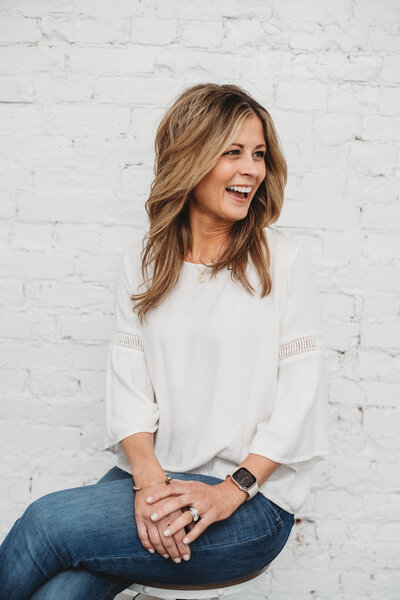


Today, I’m joined by communication scholar and Baylor professor Dr. Allison Alford to shine a light on a topic that speaks directly to the heart of so many women—the often unseen work of “daughtering.” If you’re the steady anchor of your family, the go-to for remembering birthdays, managing sibling dynamics, and smoothing over tensions before anyone else even notices, this conversation is for you!

Dr. Alford is the author of Good Daughtering and brings wisdom, empathy, and refreshing clarity to the subtle yet significant roles that many professional women carry as adult daughters, and the interplay of obligation and autonomy, devotion and depletion. She offers practical strategies to lighten your load, reclaim your agency, and reshape your definition of what it means to be “enough.” You’ll discover why recognizing your “daughtering” labor is both liberating and essential.
This conversation offers a fresh perspective on modeling daughtering, so tune in for inspiration to purposely create a life with a more sustainable, joyful balance!
Show Highlights:
- What does “daughtering” mean? 05:06
- The doing, thinking, feeling, and being work of daughters. 06:34
- Acknowledging the blessing/burden duality of daughtering. 11:45
- Is it love or duty that motivates daughtering work? 13:04
- Identifying hedonic vs. eudaimonic happiness. 13:39
- How daughtering can shift to overfunctioning and resentment. 16:21
- Research findings on daughter and son roles in family care. 19:36
- Redefining “enough” and embracing being a B+ daughter. 23:18
- How to practice microdosing daughtering and agency. 26:01
- Self-care as daughters and modeling it for the next generation. 28:44
- Dr. Alford’s book and where to find her work or contact her. 31:46
Connect with Allison Alford here: https://www.instagram.com/daughtering101/?hl=en
Subscribe to the Brilliant Balance Weekly: http://www.brilliant-balance.com/weekly
Follow Cherylanne on Instagram: http://www.instagram.com/cskolnicki
Episode #438 – Full Transcript
Cherylanne Skolnicki:
I am Cherylanne Skolnicki, and this is Brilliant Balance, the show for those of us who still dare to want it all, who have big dreams and bold ambitions. I think we deserve to have a big, full life and the freedom to enjoy it. So let’s design our next chapter together for brilliance, not burnout. Each week I’ll bring ideas, insight, and a fresh perspective to keep you growing into a life that feels as good as it looks brilliant. Balance your life your way. Now let’s get started. This is episode 438 of the Brilliant Balance Podcast, carrying the Family, the Burden and Blessing of Daughtering with Dr. Allison Alford. Listen, today’s conversation is for you, the listener. If you have always been the steady one in your family, the one who notices what needs to be handled before anyone else does, you’re probably the one remembering the birthdays, managing all the sibling dynamics, smoothing tensions, carrying the emotional temperature of the room, the one who has been daughtering right long after childhood officially ended.
And I am joined today by an expert in this Dr. Allison Alford. She is a communication scholar, a speaker, a clinical associate professor at Baylor, and the author of the forthcoming book, Good Daughtering: The Work You’ve Always Done, The Credit You’ve Never Gotten, and How to Finally Feel Like Enough. I mean, dang, do you love that title? Allison studies the invisible, often unspoken labor that adult daughters perform inside their families. It’s all that emotional management, relational upkeep, all the responsibility that so many women are carrying without having language for it or any kind of recognition. And with her PhD in communication studies and nearly two decades of teaching and research, Allison really brings a level of academic rigor to this subject in addition to deep humanity. Her work is giving voice to something that so many women feel, but really struggle to articulate the tension between obligation and autonomy, love and resentment, devotion and depletion. So in this episode, we’re talking about what it really means to carry the family and how adult daughters can begin to redefine their worth, their sense of responsibility and being enough on their own terms. So let’s welcome Alison Alford to the show.
Allison Alford:
Thank you so much. I’m so glad, uh, glad to be here. And I’m always up for a discussion about Daughtering and how we can provide a little bit of relief for the women who need it most.
CS:
Absolutely. And I have to say, like we’ve just stumbled into this topic that is sitting at the cross hairs of the audience that listens to this show. So I think your subject is going to be really resonant with everyone who’s here today. Before we get into all of your expertise and it’s so deep, I would love to just have them learn a little bit about you. So tell us a little bit about your story, the three minute version of who is Allison?
AA:
Absolutely. I am a Texas girl, even though my accent doesn’t always give that away immediately. I am a daughter, a mom of two teenagers, a wife with a dog, a cat, you know, a house. So I guess pretty idyllic in that sense. And I am somebody who all my life has been aware of the dynamics of how people interact. Yeah, I, I’ve always been kind of that empath who notices people mm-hmm <affirmative>. And notices what they’re thinking and doing and what they’re saying. And I realized as I became a researcher and I was getting my PhD, that I’m also pretty good at noticing what is not here. Like looking around at a circle of friends or a party and thinking who’s, who’s not invited mm-hmm <affirmative>. Or what’s missing from this picture. And in many ways I have directed that to, to women and women’s lives. What is it that women are doing but not getting credit for? Or how are women shut out from this experience where they could get some value or get some relief? And that’s kind of made it my mission really to, to reach women and say, there’s a lot of ways that just by talking, communicating and creating awareness around certain situations, we can support each other. We can hold each other up and say, girl, you’re doing it <laugh> and I see it. Even if society isn’t giving you credit for it, I know you’re doing it and it’s hard work and I appreciate it.
CS:
That’s amazing. It’s amazing because when you give voice to something that has been unspoken, I think it’s so powerful. Just naming something that people have not had language for, I think is a really powerful shift. I know Brene Brown has done it so many times in other Texas academics and we love her so much for it. So just being able to give voice to something that we don’t necessarily have language for is powerful on its own. Right. So when you talk about carrying the family, right? Or Daughtering, what are you naming that so many adult daughters feel, but don’t really have the words for?
AA:
Now? The word daughtering is meant to be this active way of thinking of adult daughters and families. And sometimes when you say what daughters do in families, women’s minds jump to what we’ll do for the elderly. Mm-hmm. Or what we might do if someone is sick. Mm-hmm. But I’m talking about what you started doing when you were 20 and you moved out of the house and you had to, you know, call and soothe and smooth and organize and think in advance and buy the gift and spend the money <laugh> and it keeps going and changing in your twenties, thirties, forties. And so Daughtering is really focusing on the choice that we have, the agency, but also the way that we purposely show up in our families to try to help keep it running and keep it together because we like being in a family, but we have to name that hard work and give ourselves credit for it.
CS:
Yeah. And you got into some interesting categories right away. I immediately started thinking about my sister-in-law when you were talking about some of this. She’s the oldest. My, I’m married to the oldest child, but she’s the oldest daughter. And when I look at the difference in the way the two of them carry responsibility in their family, it falls exactly along these lines that you’re describing. So what are some of those buckets of work that you see most often, and maybe I shouldn’t even call them work. Maybe it’s activity that you see daughters taking on
AA:
Work is a great way to describe it. You know, there’s all kinds of work, paid work, unpaid work, parenting work, friendship work, community work. And the word work just helps us understand that I’m choosing to give my resources to this mm-hmm <affirmative>. And it’s not easy just even if I make it look easy. So when we think about daughters and daughtering, I like to identify four buckets. And that’s thinking, feeling, and being at work. Doing work is the most obvious. That’s where we see someone take, take a meal to someone, you know, we’re doing something for the family or the daughter fills her mom stocking at Christmas, she’s doing something or making phone calls. But the, and so all kinds of tasks fall under the sort of doing or task work. The thinking work is what we do inside our mind. It’s our cognitive, you know,
CS:
It’s been
AA:
Yeah. Mm-hmm. Yeah. It’s when we’re the, we’re the family, CEO because we’re organizing, we’re planning ahead, we’re three steps ahead, removing roadblocks so that we don’t have an issue down the line. And that’s really tough for people to see because we never hit the problematic thing because the daughter has mentally gone ahead. Yeah.
CS:
She smoothed the path mm-hmm
AA:
<affirmative>. Handled it. Um, but it’s, it’s a super valuable way for women to show up in families just by thinking ahead. That’s
CS:
The thinking works. Okay. So doing and thinking. Yeah.
AA:
So doing and thinking. The third one is the feeling of work. And that’s really the emotional part, uh, which I think a lot of women identify with. And you know, especially with the conversations around eldest daughtering, we’re really identifying this. So there’s two kinds of, uh, feeling work and one is just helping everybody feel good. Okay. If I call my mom, I’m like, how was work today? How are you? Oh, I’m sorry to hear about that. Oh, how is Nana? Oh, how’s your sister? You know? And I just smooth and kind of smooth it over. Another kind of work is when we make ourselves seem okay to make the situation okay. Even when maybe internally we feel some friction. And I think of that happening when I go to a family dinner and somebody brings up politics and I just keep my mouth closed and I’m really working on self-control mm-hmm <affirmative>. In order to make the moment good, to make everybody feel good experience’s
CS:
Kind of that, that going along to get along. Like, I’ll just be quiet, and go along to get along. Yeah.
AA:
And that takes restraint. Oh yes. And that means that it’s used, our resources, we go home, we’re exhausted. Mm-hmm <affirmative>. Like, why am I so tired? And it’s like, because I held back what I could have said, what I wanted to say for the good of the family. So, that’s the emotion work part. The soothing and the smoothing and the fixing my face and things like that too, to make things good. Um, so that last kind of work is being work and that’s identity stuff. So how am I representing my family as a daughter of the family, even when nobody’s around? How am I telling others about it? I see how great our family is, the
CS:
Reputation, work
AA:
Traditions going, the reputa, the legacy. Yes. Yes. What is it that I do with my children that’s important for helping them think my family’s cool?
CS:
Oh my God, I’ve never thought about this part. Yeah. This is the breakthrough.
AA:
Mm-hmm <affirmative>. Yeah. So thinking, feeling and being are absolutely invisible. Invisible in that they’re not something we see people doing with their hands and feet.
CS:
So let me see if I get this right. Yeah. So, or if I’m, if I’m getting at what you’re saying. So the thinking work is smoothing things out in advance. I’m seeing around corners, I’m handling things, sort of all that executive function work that we often do as mothers. We’re sort of translating into our extended family of origin. And then feeling work is, I am responsible for, is it just mom or is it my parents’ emotions? Everybody’s,
AA:
It’s any parent. It could, you could even extend daughtering to a stepparent mm-hmm <affirmative>. Or a parent in law. And so I use the word parent. I would say it’s mostly moms. Mostly moms. But not everybody has
CS:
A mom. Your example was mom. That’s why I asked the question. But it is, it’s largely like, I’m gonna make sure that I am not causing negative feelings and that I am also helping them manage their feelings, like helping them feel seen Exactly. And heard. And then here, the being piece I had never thought about, of just what is my role in legacy identity tradition. Right. What, what am I carrying on as a member of this family? That is, that is really important and that it falls, it does fall to the daughters to carry those things on. That’s fascinating. My mom, I’m thinking about my mom as a daughter now and to this day, her siblings and their spouses, she has all brothers call her to participate in and be coached through these family traditions, like traditional foods and stuff at the holidays. Yeah. And they insist that she’s the one who is like, you know, bearing. It’s so fascinating how it works in layers.
AA:
And some of those things are really fun and pleasant to do. That’s the
CS:
Blessing part of it in some ways.
AA:
Right. I think if I was called and said, what’s that special family dish? And somebody was like, you make it the best. That’s, and they said nice things, <laugh>, you know, it feels good. And so there’s a lot of parts of Daughtering that feel good. It feels good to be a member of a family, to have a support system, to have people rely on you. But much like our other jobs, whether it’s our regular daily job where we go to work and make money, it’s also stressful. Sometimes it also requires our attention. It can cross our, our, our body, our stress, you know. And so it’s, it’s, um, we need to recognize both parts of it in order to understand how to properly place daughtering in our lives without getting burnt out, which then impacts everybody negatively.
CS:
I don’t know if this is in your book, but something I’ve talked about a lot with my oldest daughter, and it really was rooted in an essay that she wrote in high school, was the difference between doing something out of duty or obligation and doing it out of love. And that’s a little bit of what I hear here in the duality is whether it is a burden or a blessing is probably predicated upon whether you view this particular thing as an obligation or as something that you are doing with complete willingness, right. As an act of love? What do you think about that?
AA:
To me, those things exist together. You know, they can exist together. They don’t always exist together. Okay. We can do things out of obligation and we hate doing them, but we also can say to our parents, you know, they’re like, you don’t have to come around here all the time. And you can say, I want to, that’s luck. Right. ’cause I like, I like being with you, but I like being able to do things for you. Mm-hmm <affirmative>. Um, so one of the things I talk about in my book is different ways that daughters can picture happiness in our lives as daughters. How does Daughtering contribute to my happiness?
CS:
Okay.
AA:
So sometimes when I’m daughtering and I just go hang out with my parent and I open, like, I go to my mom’s house and I always call it shopping, and I just open pantries and I take things and I, you know, I sit at her table and eat Fritos and Bean dip. We love that <laugh> and we just interact and we just enjoy each other. And I’m even kind of trying to get mothering from her. Yeah. And, and, and it’s fun. I like it. Then that might be part of the type of happiness I call hedonic happiness, or I don’t call it, it’s something Martin came up with. Yeah. <laugh>. And it’s just the things that are fun mm-hmm. You know, it’s fun at the moment and we like doing it, but other times we have to do things that are not really fun at the moment, but they feel like they’re important for our long-term self.
Who do I wanna be as a daughter, as a person, as a human? And so that kind of leans towards the obligation piece. So I go, you know, I, I do things like, we went on a big family vacation and I spent a ton of money on a photo session and I got everybody organized and I was out there sweating. And then later I, you know, got the pictures printed and gave them to everyone. And in the moment it really wasn’t very fun, but I felt like I had contributed to something important to the family, to the big family. And so I added to my monic happiness that’s that long term, lifelong happiness, more purpose
CS:
Driven, like
AA:
Fulfillment. That’s right. Mm-hmm <affirmative>. And so we do things out of obligation, but they do still contribute to a form of happiness. You know, it
CS:
Like, so you could think of the hedonic stuff as like, I would do this anyhow. I would go sit and eat Fritos and bean dip right. At someone else’s house. It would just be fun. And then also I may not organize a photo shoot for just anyone unless I was getting paid to do it. But in this case I will, because it’s purpose driven it, I know it matters. That’s the monic level. Yeah. I think that’s a really good distinction. Got it. Mm-hmm <affirmative>. That there’s
AA:
Either, yeah. So we can, you would do either, we don’t just have to, to think of obligation as these wholly negative things. Uh, I can do things out of obligation and still think, well, I feel good about being a good person. Mm-hmm <affirmative>. You know, like, I,
CS:
Honestly, I think it’s harder though, honestly Alison, I think well yeah. When our core motivation is I’m doing this because I have to. Right. I think what it starts to do is maybe eliminate the agency where you were talking about before, like underneath all of this is you have a choice. If I really feel like I don’t, like there’s such negative consequences to not doing it, or there’s so clearly no one else to do it, then I think it can lead to resentment.
AA:
Yeah. Yeah. What do you think about that? We get stuck in that trap. Yeah. Of over-functioning mm-hmm. It is love. Mm-hmm. And that I have to give this and because I did it one time, I have to do it again and again time mm-hmm <affirmative>. And that there is definitely nobody else who can do it just because my siblings aren’t jumping up to do it or because I haven’t found someone to pay to help me with this. We can sort of feel like, well, I guess it’s me, and then we guess to do it, do this <laugh>, and then we do, we get stuck in that feeling of being taken for granted. That’s right. ’cause our work as a daughter isn’t, we’re, we’re not giving it credit and we’re not feeling seen and valued. So it doesn’t feel like our daughtering matters.
CS:
And in some ways, I think there’s an analogy to the work as a parent, which can be thankless. Right. You said you have teenagers. I do too. I think I don’t expect them to be like, wow, thanks mom for making sure I got out of bed. Thanks. My, like, that’s silly. They’re not gonna do that. And yet it would be great, you know, to be, to feel a sense of appreciation back. So I think whenever something crosses from, I loved your language of like, we did it once. It was maybe unexpected and delightful and people were grateful, but then now you’re the one who every year has to do the photo shoot that crosses over to now we’re at expectation, and I don’t think people have the same gratitude once something is expected. So it changes the whole kind of, um, the calculus shifts a little bit on how everybody, how the whole ecosystem feels about that particular activity. Right. The first time you do it, it’s a delight. But I wonder if that holds over time and maybe if that’s part of what ends up in this dynamic.
AA:
For sure. And, and that can happen in any relationship or any space. Mm-hmm. I know your listeners think a lot about their workplace. I mean, one day, one time you bring cookies for somebody and you’re the cookie girl, and then you start, now you’re the cookie person, <laugh>. And or you feel like, well now I have to bring it for everybody’s birthday. That’s right. That’s right. Or I have to bring it at every event. And then it doesn’t, you don’t wanna do it anymore and you’ve lost the original joy That’s right. That you had in it. And so there’s an opportunity here to say, I’m not stuck, I’m not forced, I don’t have to, I have a choice. Yes. And I can recalibrate any of these spaces what I wanna do, what I don’t wanna do, and there’s gonna be some stuff I have to do, but I don’t have to do everything that’s
CS:
Right. Or the same way I’ve always done it at the
AA:
Same level or the same way. Or I can get some help.
CS:
Did you know that beyond hosting this podcast, I also directly support women leaders at the intersection of work and life As a member of Bold, you get direct access to me, the women on my team, and a peer group of exceptional women who are rewriting the rules and redefining what it means to have it all together. Go to brilliant balance.com/bold to learn more and apply for your spot today. So Alison, what’s the, this is such an overlap in content that I teach. I love how people who know have been around a while will hear it. I don’t even need to echo it. I am curious about the gender dynamic. We specifically are using the word daughtering here. Can you talk a little bit about how that shows up in your work and your research?
AA:
Yeah. So I noticed particularly that daughters were different from sons for a few key reasons. Research tells us that the relationship between a daughter and her mother in particular is one of the most important relationships for her entire lifetime. So it’s persisting over decades and over many different contexts. The intimacy and closeness level changes. Whereas we know from research that sons are not always staying that close with a mother or a father. Their closest relationship in life may be their spouse. And so they have, so there’s a little bit of difference there in how connected sons stay to their family members. Um, but a but a huge part of what the work of Daughtering, where it comes from and why we feel so, so much guilt or necessity to be a good daughter is from these so, so social expectations. Yes. And women are expected to do daughtering to show up, to be good at it and to just get it done. And so we never talk about it. That’s right. Um, and so it, it, it kind of ends up reifying itself because you watched your mom do it, you see your friends doing it, and I am calling for us to, you know, take a little time out and say pause. Let’s talk about who’s doing what, why, and if I even want to, and make some recalculations, like you said,
CS:
Oh my gosh. The overlap is astonishing. So, because I think about the places this could layer you, we are already talking about this in partner dynamics at home, right? So whether you’re, yes, you have a spouse or a partner who is, how are we sharing the work that needs to be done to run this household, to parent these children to, you know, kind of run this little ecosystem that we’ve built here together. You’re bringing up another arena. Like, okay, so our family of origin, who are all the players involved? What are the roles of all of those people in sustaining the systems of that family of origin? Then we can take it to the workplace. What are they, so in all cases we make some base assumptions like, this is my job because I am the wife, I am the female partner, I am the mother, I am the daughter. That doesn’t necessarily have to be defined. And you’re saying like, we can pause and insert a little agency and intentionality here and redistribute these responsibilities among a broader collection of people, I suppose.
AA:
Absolutely. You know, what is that? What’s funny is that we’re, we’re a daughter first. Yeah. So you’re talking about being a wife and a mother. I mean, those things don’t even enter for some women at all. And they don’t always last forever. For some people, marriages come, you know, can come and go. Yeah. Um, but the daughter, so, so first of all, I think we deserve to give some honor and some privilege to, um, the specialness of being a daughter. We’re a daughter the first day we’re born, we’re a daughter till the day we die, even when our parents have been gone for a while. And so we have to, what, what, when we give a little bit more of our attention to how valuable and important this is, and we are not taking for granted our family system either, and how much we’re glad they’re there to jump in and support us if we need them, then we just start to kind of go to this metaplace Yeah.
Of looking at things a little differently and then saying, okay, I can drop some things. I can partner with some people on things I can change so that I can find more balance in my life. And it starts with these really subtle shifts. Give us a couple of me defining, give us a couple. Alright. So the first thing I want women to shift on is redefining what is enough? What does it mean to be good enough, A good daughter? And so my first recommendation, my first tip is to figure out one thing or two things that you’re doing automatically that you can drop. I’d let them drop and see what happens. Okay. And you’ve been doing them automatically, right? But maybe you don’t want to, you’re thinking now, do I even like that thing? And, uh, the next thing I want you to do is make a mental note for yourself that the goal is not perfection. So what you’re gonna do is strive to be a B plus daughter. Mm-hmm <affirmative>. Do it for a month, do it for a quarter. Do it for a year. Yep. But say to yourself, what if the goal was B plus daughtering so that I’m not always moving the goalpost of what is good enough? What is worthwhile? What do I have to do to receive love or to be a valuable member of this family? Who’s
CS:
The grader in that metaphor? Who’s grading
AA:
You? You are grading yourself, you’re grading yourself. And I think for some of us we very literally need to write some things down. So I might say to myself, okay, a very good daughter, the best daughter would call her mom. Some people would say every day, I would say three times a week. Okay. But I’m gonna be a b plus daughter, so I am going to let myself call once a week mm-hmm <affirmative>. And each of us can have a different metric. Okay. But essentially we are creating a rubric, but by writing it down or saying it out loud, we’re actually going to be able to measure what I think is the awesome version, and then what is the b plus version? And then find out, am I there or am I even exceeding it?
CS:
And because I know I have an audience that maybe veers, perfectionistic, I think this is particularly rich territory to say like, you also don’t have to choose B plus work in every aspect of Daughtering. You could say, you know, communication, I’m gonna be a plus in, but family traditions, I’m gonna be a bpl. Like, there’s, there’s elements of daughtering here. Like you were talking about, this isn’t an all or nothing approach, but where can you get a little more ease, a little more freedom and space? Because the reality is this is one of those components of our responsibilities that collectively with all of the other responsibilities gets crushing. Right? If this is all we had to do, we’d be great at it. But the fact that there are other things vying for our time and attention and energy, everything has to kinda get right sized a little bit. So I love this notion of I could eliminate something, I could do b plus work. Is there another one coming?
AA:
We can do one more <laugh>, which is what I would like to recommend in terms of, you know, how do I do B plus Daughtering? Try microdosing your daughtering. Okay. Microdosing means I’m going to give daughtering in small amounts, and I’m gonna call that good enough. So for me, an example of microdosing, daughtering is 10 minute phone calls. Mm-hmm <affirmative>. So I try to make more frequent phone calls because I put that on my rubric as something valuable that I know my parents like. But I’m going to give these short births and not think that an effective phone call has to be an hour or two hours. I don’t have that to give from my emotional bandwidth as often as I would like. But what I do have to give is 10 minutes of saying, here’s what I did. What did you do? Oh, that’s great. I love you so much. I value you. Like hang up the call <laugh>. Yeah. Because I, I have to reserve some of those emotions and some of those times for other people. Yeah. In particular, my teenagers need a lot of my emotions right now. That’s right. That’s right. They’re really digging deep into that. Well, so I have to trust that my parents can also take care of themselves, that they’re gonna find that fulfillment, fulfillment somewhere else if they need to.
CS:
And I think it’s such an important note that this does fluctuate seasonally, right? Like there are seasons of your life that, and, and not just, not just ages and stages, right. But seasons you’re in. Like if you are in a really significant crunch at work, that is a season where daughtering may need to step down a level. If you have a crisis with a child or a newborn or a teenager, like there’s seasons of life, short seasons or longer where things ebb and flow. And sometimes I think we get ourselves in trouble because kind of what you were saying earlier, we do it once, we do it this way and it’s set in stone as this is how we do it forever more versus allowing things to really change Right. And evolve. And in either direction we can increase or decrease the time and energy that we put into some of these things.
I love it. I love it. You’re giving us so much permission, Alison, and I think that’s the, when you started with the word agency, you had me there because I think the more we can remind, particularly women, but really adults, that we do have more choices than we’re giving ourselves credit for. We’re acting like there’s no other way. And often we just haven’t stopped long enough to assess and think and maybe reimagine what could be equally good. And you, you’re so well equipped and I love that you’ve spent your time and devoted your like, academic energy to this because it’s really important.
AA:
Yeah. I, I think so I think it’s important for, for women in, in our bodies to have that balance to find places where we notice where stress or tension is coming from, and sometimes that we’re doing it to ourselves and, uh, find ways that we can seek a little relief, but without, you know, not relief, and that we stop doing something and then we double up on guilt, but relief all the way around. I love that word. Permission and recognizing that if we do some of these things, we’re not just quitting on our family. Yeah. We’re not disconnecting, we’re doing these things to make the relationship better, to make it stronger longer, and to model for other generations, our kids and the future, how to do family really richly without self-sacrifice or self erasure.
CS:
Maybe sustainably is like the through line of like sustainable. It has to be something sustainable, right. Sustainable, yeah. That we can sustain and that we can model something that is admirable or aspirational. I’m so drawn to the, um, the data on how many young women we both have. Teenagers are like, I don’t even wanna have kids because that looks like a terrible life situation. And I think we have to be careful about both what we’re modeling for daughtering and mothering in terms of do we wanna create something that they look at and think, oh, I don’t even wanna do that. You know, generationally, I think that’s a really significant dynamic and
AA:
Very aware. Yeah. And how we talk about things is so important. And that’s why we’re trying to get both sides here. What is work? What is daughtering? What is the burden and the stress that can pull us down? But also recognizing if we can fix a little of that side, we can lean into the blessing, the goodness and the value. Um, which maybe what some of our younger generation is missing about. Yes. What’s great about being a parent? Yes. Um, which is just a reminder that I need to narrate, that I need to narrate my daughtering, I need to narrate my parenting. I was just telling my husband I need to come home and say nice things about my workplace because I just have this tendency sometimes to dump the hard parts. Mm-hmm. And say those out loud. And I wanna make sure I say the good parts out loud. I love being connected in an intergenerational family. I love having a job that pays me money. I love being a parent. Yes. But I don’t need to pretend like it’s easy or perfect. I have to have that balance of describing both of these things, not just for my children, but for me it’s important so that my brain, I my brain is processing it too. Mm-hmm
CS:
<affirmative>. That is brilliant. It really is. And I think being, expanding the narrative to really consciously talk about all of it, you know, we wanna be honest and it is a multi multifaceted endeavor. All of these roles that we play. Well, you have been fantastic and enlightening, so I’m so glad that we were able to get your time to be on the show. Can you tell people where they can find you and your work?
AA:
Absolutely. I would love for women, if you are a daughter, if you know a daughter, love a daughter, have a daughter to pick up the book. Good daughtering. So it’s, it’s this bright pink one. Beautiful. It’s out February, 2026. And find me particularly on Instagram at Daughtering 1 0 1 and you can find all the other places to reach me in my substack in my website from there. But please contact me and let me know what you’re thinking about Daughtering.
CS:
Fantastic. Again, thank you so much for being here today. It was a delight to have you. If you are new to the Brilliant Balance Show. Thanks for tuning in today. I hope you loved today’s episode. If you don’t yet follow the show or subscribe, go ahead and do that so that you never miss an episode. That is all for today, my friends. Till next time, let’s be brilliant.