


What does it take to build an ambitious career without losing sight of what matters most?

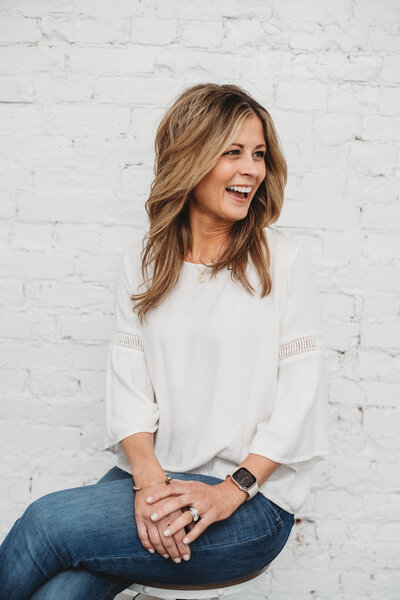
In this episode, I’m joined by Betsy Hamm, former CEO of Duck Donuts and founder of Loud & Lifted. Betsy shares the unexpected career moves that took her from marketing iconic brands to leading a company through rapid growth, private equity, and international expansion. Along the way, she opens up about the invisible rules she had to rewrite, both at work and at home.
If you’re navigating a season of growth, leadership, or reinvention, this conversation offers a refreshing reminder that success doesn’t have to come at the expense of your values.
Show Highlights:
-
How Betsy’s career evolved from Hershey to Duck Donuts. 08:30
-
What it was like to help grow Duck Donuts from 20 to 200 locations. 26:10
-
Why she stepped into the CEO role during one of the most challenging seasons. 45:15
-
The pressure of leading through private equity, rapid growth, and COVID. 49:30
-
The invisible rules she had to let go of at home and at work. 1:00:20
-
Why delegating at home was harder than delegating at work. 1:02:15
-
What she learned about building the right leadership team. 1:10:30
-
How leaving the CEO role led to an unexpected new chapter. 1:20:45
-
The mission behind Loud & Lifted and creating spaces where women support women. 1:28:20
-
The legacy Betsy hopes to leave for her daughters. 1:40:15
Resources Mentioned:
Learn more about Betsy Hamm: https://betsyhamm.com
Listen to the Loud & Lifted Podcast: https://loudandliftedpodcast.com
Connect with Betsy on LinkedIn: https://www.linkedin.com/in/betsyhamm/
To book an exploratory call and learn about coaching options: http://brilliant-balance.com/explore
Join The Coaching Circle to apply what you learn on the podcast with structure & support: https://brilliant-balance.com/coachingcircle
Subscribe for weekly content from Cherylanne straight to your inbox: https://brilliantbalance.substack.com/
Follow Cherylanne on Instagram: http://www.instagram.com/cskolnicki
Episode #459 – Full Transcript
Cherylanne Skolnicki:
I’m Cherylanne Skolnicki, and this is Brilliant Balance, the show for those of us who still dare to want it all, who have big dreams and bold ambitions. I think we deserve to have a big, full life and the freedom to enjoy it. So let’s design our next chapter together for brilliance, not burnout. Each week, I’ll bring ideas, insight, and a fresh perspective to keep you growing into a life that feels as good as it looks. Brilliant Balance, your life, your way. Now let’s get started.
Welcome back to the Brilliant Balance Podcast. My guest today is Betsy Ham. So I met Betsy just recently, and I’m so fascinated by her career trajectory because she is a fellow Pennsylvania girl. She cut her teeth at the Hershey Company, which was one of her first employers, and she worked in marketing for that organization. So if you’re familiar with Hershey Park or the Hershey Chocolate brand, Hershey Resorts, all of the things in and around Hershey, that’s where Betsy got her start. And at a certain point, she was recruited to work for Duck Donuts, the fast-growing donut brand, sort of custom-made, warm, freshly made donuts, um, that started in the Outer Banks of North Carolina and expanded across the country and really around the world during her tenure there as essentially the CMO, COO, and ultimately the CEO of that company. And Betsy has now left Duck Donuts and is out on her own helping leaders and, um, businesses build and grow their brands, kind of leveraging what she learned both at Hershey and at Duck.
And I think that what intrigued me most about her story beyond the titles that she’s held and the experiences that she’s had is the way that she’s continued to evolve through different seasons of her professional life and of her personal life while raising a family. She has two girls and is navigating all of the complexity that comes with that very full life. So in our conversation, we’re talking about what actually kind of changes as your life gets bigger. Um, how has she evolved from stewarding an established brand to growing a fledgling brand, like taking Duck, you know, out into the world, to starting her own brand like she is doing right now? And what does really sustainable ambition look like over the long haul? So if you’ve ever kind of wondered what it looks like behind the scenes of a high growth career like Betsy’s, I think you’re in for a treat and you’re gonna find a lot of wisdom in this conversation.
I certainly did and found her to be a really just delightful conversation partner. So let’s get into the interview. So Betsy, welcome to the show. Thanks for being here today. I’m really excited to talk to you.
Besty Hamm:
Thank you so much for having me. I’m so happy to be here.
CS: I shifted gears recently, um, in this podcast sort of interview format and started asking people, tell me what little Betsy was like when we started the interview. Because, and I am, it has been so illustrative. So will you share a little bit about what little Betsy was like?
BH:
Oh My gosh. It’s funny when you say that, I’m like, whoa, I have to think about that. Like, right? How did that all start? Mm-hmm. You know, I am the oldest daughter. I have two younger sisters. So I think growing up, I was always the person sort of taking the lead, organizing, coordinating things, and, you know, dance routines in the backyard and, and those types of fun things with my sister. So I was definitely always very active, very involved, you know, and as I grew up in high school, it was playing sports and, and doing those types of things. Um, and just incredibly extroverted and very social from even, like, a super young age. So when you do say that, I kind of think, “Well, I guess I really haven’t changed since
CS:
40 <laugh>.” Right, right, right. What did you play? What sports?
BH:
I played volleyball and softball.
CS:
So fun. So fun. So you had this kind of, like, high achiever, eldest daughter vibe going. Yes. And then what happened from there? What was school like for you?
BH:
Um, you know, in high school and in regular school, like, undergrad, or undergrad Gs in high school – Yeah. I definitely was, you know, just probably your average student. I had As and Bs, and I always struggled with math, so there were probably some Cs in there for sure. Mm-hmm. I definitely had to study and put in the time and effort. And then going to college, you know, is a different game because then you get to take classes to pay for the most part – Sure. Of things that you like and that you could focus on. And, and I think in college is where I really just started to excel and, and kind of find my way and, and realize what I liked and what those passions were. And that, you know, it doesn’t have to always be about the book smarts, especially in business. So much of it is about connecting the dots and the people piece of it, right?
BH:
For sure. Which I’ve always been very good at. So leaning into that more, I think you have that opportunity in college versus high school where it’s like, take the test, get the grade, move on, take the other class. So-mm. Did
CS:
You know what you wanted to do, to work in business? Was that like a thing you knew in college?
BH:
Um, you know what? I don’t think I really knew. And it’s so funny because my oldest daughter’s 18 and she’s going to college. So it’s like you’re having all of these flashbacks of what it was like – Amen.
CS:
When you were
BH:
- It’s so wild. Um, I was always liking the creativity, like the writing and, and the producing and – Yeah. Sort of the art piece of it. And ironically, that is my 18-year-old, which is very funny. Oh. Um, yeah, so it’s. I’m literally. And she’s going to the college I went to, so I mean, talk about flashbacks. Oh.
CS:
<laugh>
BH:
She’s my many. Um, but, you know, I think back to that time where I knew the pieces that I liked. Yeah. But my parents were teachers. All of their friends were teachers. I didn’t even know what existed out there. What
CS:
Is it business? Right. What is
BH:
Business? Mm-hmm. Yes. So, you know, I think I’m, I ended up majoring in communications journalism. I learned about marketing along the way. I thought internships were important. But I mean, at 18, I just knew that I didn’t wanna be a teacher. That’s what I knew at 18. <laugh>
CS:
So fascinating, isn’t it? How we’re, like, hard to reject. My mom was a teacher too, and I told her the same thing. And here I am essentially teaching. I mean, for all intents and purposes.
BH:
Yeah. Yes.
CS:
Yeah. Full circle. Full circle. So then you went to school, and what was your first job out of school?
BH:
My first job out of school was actually at a media agency. So I did internships, uh, for Hershey, for Hershey Entertainment and Resource when I was in college. And that’s what really opened up my eyes to marketing and understanding, you know, I kind of knew PR from, from school, and that was my concentration. But then I was like, “Oh, there’s this marketing thing and promotions and, and, you know, it, the, the brand strategy and marketing strategy.” So I had internships at Hershey when I was in college. And then when I graduated, they just didn’t have anything open. So I actually worked at a media agency for the first year until something, um, opened back up at Hershey, which again was in marketing, which was a really great experience too.
CS:
And this is a fun part of your story I was saying before we started recording that because I grew up in Pennsylvania and, you know, Hershey Park was like the theme park we went to. We’ve taken our kids there. You do this whole world of chocolate tour. Yep. It’s just such a delightful, like, happy place. Um, and you spent a fair amount of time there. What was, like, your favorite assignment while you were at Hershey?
BH:
Yeah, so it’s the sweetest place on earth, right? It is. Which is an awesome, an awesome high
CS:
Time. Disney gets to be the happiest, but Hershey is the sweetest.
BH:
Right. Yeah. Hersheypark Happy, sweetest place on earth. Yeah, you know, so we have all these things that literally do smell like chocolate. It
CS:
Does.
BH:
Hershey’s legit, you know? So you have all these pieces. And, coming out of college, essentially, I was at an agency for a year, but coming out of a col – coming out of college and having this opportunity to work for this brand that was what? They celebrated Hersheypark, and celebrated their hundredth birthday or anniversary when I was there. So here’s this brand that is, is, is old, but has continued to evolve and has this huge corporate structure behind it. And it was really amazing to have that for a first job because I was in the marketing department. But, you know, we worked very closely with operations – Yeah. And entertainment and, uh, food and beverage and just all these pieces. And despite it being a well-established company, the things that I had exposure to, to building. And, you know, from a marketing perspective, of course, Hershey, you say the word Hershey, even if someone hasn’t been to the town, they know – They
CS:
Know the candy. Sure. The chocolate.
BH:
Right. Sure. So there’s that brand awareness and, and the love. And it’s so funny that you sent me a picture of your family there because when you say Hershey, people wanna tell you their experience – They do. And their time there and their story. Yeah. There’s this love for the brand, which was so great. So having the opportunity to be part of that and to build and to launch things like new roller coasters and a chocolate spa – Yeah. And all of these – Yes. You know, really cool product launches from a marketing standpoint is like someone’s dream. And here I am out of college spending 15 years building this iconic brand.
CS:
Mm-hmm. And what people might not know is that in addition to the park, right? So think of it if you’ve been to, like, Six Flags or, you know, King’s Island here in Cincinnati, you have. It’s similar, right? There’s an amusement park. Yep. But then there’s also, like, a resort and hotels – Yes. They are affiliated with the brand. You have this sort of, like, museum and factory tour – Yeah. That you can do. So there’s kind of a, like, little megalopolis going on around this city. Right. And so – and that, I think, is interesting because you were really involved with a lot of those different pieces of it – Yeah. Not just one.
BH:
Yeah. Marketing it. And concerts and hockey games. So, you know, doing AHL hockey for the Hershey Bears. And, and actually, you talk about, like, highlights. This is so funny, but one of my summers, I did the summer concert series, so Hershey attracts all these big name concerts. Yeah. And my job was the PR and promotion, so I – Oh, you got to
CS:
Greet the talent. Oh. I had to
BH:
Meet all, meet all the talent, give them a five-pound chocolate bar, get my picture taken. So it’s hilarious to, like, this day. I’m like, “I met that person. I met that person.” You have all
CS:
These photo ops from the. Yeah. It’s funny, isn’t it? When we leave pieces of our career behind, the things you look back on and miss are not, like, the core work always. Sometimes it’s just some of the perks that were, like, really memorable experiences. Right. Mm-hmm. Yeah. So fun. So at some point along the way here, you make this big pivot. Um, maybe it doesn’t feel as big to you. It looks like it from the outside. And you end up at Duck Donuts, which is a brand that a lot of listeners are gonna recognize because you took that business from 20 to 200 units. So now, most of us have been in a state or an area that has a Duck Donuts. But before we say how you got there, can you tell them a little bit about what the brand is? Sure. Like, what’s its kind of claim to fame?
BH:
Yeah. So Duck Donuts is a made to order donut concept. It started in the Outer Banks in Duck, North Carolina, hence the name. And, the founder was there on vacation years ago and realized there was no place to get a warm made-to-order donut. So he started it, and what started as just this, you know, little donut shop in the Outer Banks, which if you’ve ever been there, is just this chill,
CS:
Crazy – Iconic, yeah.
BH:
E-town, right? Um, the, the. It became this cult-like following. People loved the brand. So he started franchising and, and it was the going in, ordering your donuts, getting to choose your topping so you could say, “Oh, I want a vanilla, I want a all vanilla cake donuts, but I want a donut with vanilla icing and Oreo cookies or maple bacon.” And then they drop the donuts, they make them right then, and they hand you a box of, like, warm, fresh
CS:
Donuts. Warm, fresh, custom donut donut. If you ever had
BH:
A warm donut, you need to. <laugh>
CS:
I know. Yeah. I lived in Atlanta where Krispy Kreme rules the day. Yeah. And that, I mean, they would put a sign up that would say hot donuts, so you knew if they had just been made or not. It’s wild. Yes. Yeah. A warm
BH:
Dogs are different. But the
CS:
Customization was really the point of difference for a duck, right? I mean, they were like, “We’re, we’re gonna make your donut for you with the toppings that you choose.” And I think, I mean, you imagine being on vacation with your kids, what a blast that would’ve
BH:
Been. Absolutely. Yes. Okay. We used to say we had a duck zillion combinations, right? Because you could do so many different things – Of course you did. Icings and the toppings, and then you could drizzle more icing on top. And, you know, so it was definitely, you know, and very rarely did we run out of a donut. You know, sometimes you go into a donut shop and they’re like, “Oh, sorry. I don’t have any more chocolate icing donuts,” right? Well, very rarely, I might say it never happened, but because they were made to order, it’s like – Sure. We can make that for you. So it was great.
CS:
So how did you end up there?
BH:
So it’s funny. You know, being at Hershey for 15 years in various marketing positions, uh, as I mentioned, an amazing brand. I love the opportunity, but I knew my boss, who was the CMO, was not gonna be heading anywhere anytime soon, which was a good call because she’s still there 10 years later. Oh, wow.
CS:
Um – Yeah.
BH:
So that worked. So just kinda kept feelers out there that, “Hey, if you hear of anything, like, I didn’t wanna leave just to leave. I wanted to leave for a good opportunity. Uh, let me know.” So someone in my network had reached out and said, “Hey, Duck Donuts is opening their corporate headquarters in the Harrisburg area where I live in Pennsylvania. And they want someone to come in and build their marketing team.” And I was like, “I don’t even know what that is. I’m Googling, you know, Duck Donuts.”huck donut. Right, right. What’s Duck Donut? You know, I don’t even, like, know if I’m interested in the product. And, um, I had reached out to some of my girlfriends who would always go to the Outer Banks because I had not been to Outer Banks at the time. And they were like, “Oh my gosh, you have to take this interview.” They were so excited.
BH:
And I’m, I’m like, “This is a donut. Why are you so excited about me taking this interview?”
CS:
High net promoter score. Yeah.
BH:
They’re the right part of the cult-like following. So when I met with the founder, um, who was the CEO at the time, you know, he painted this picture of, “Hey, here’s this brand that has made this crazy cult-like following in the Outer Banks, and we decided to start franchising, and now, you know, we need to become more sophisticated.” So what started really as a marketing role is what I started there at, um, I was employee number 12, and I was the first person outside the friends and family circle. So talking about culture shock and, and things being different, coming from a really large, very structured, very corporate, very political company like Hershey, to this, like, startup that was like a mom and pop run. Um, you know, very unsophisticated and they were growing quickly, like, selling franchises crazy fast. So I was trying to figure out how to come in and, and set it up for success to, to continue to move forward.
CS:
And your marketing. At this time, you took a marketing role. Yes. And so you were focused on consumer demand. Correct. You weren’t working on the expansion plans at that time. Okay.
BH:
No. And there was no need – That changed
CS:
Quickly. Yeah.
BH:
I was gonna say, originally, there was no need for expansion plans because, I mean, they couldn’t even keep the volume of inquiries at the time. So yeah, so when I started, it was just marketing and, and, you know, getting clear on the brand strategy and the marketing strategy. And, you know, there were several ducks and just, you know, things like that. Um, but as I was doing that and building out the team, I was the, I was a team of one. So here I come from this huge marketing team, decent staff, to now, like, coming up with these ideas and then looking around and being like – And executing
CS:
Them. Yep. Oh, I have to do this too. <laugh>
BH:
Um, so yeah, so really just focused on marketing for the first year. But because it was a small company, I worked closely with the founder and, you know, asking all those questions of, like, well, how many do we wanna open? What are our goals? What about the strategy? And he’s like, you know, he’s the pure founder, right? Like, that’s his, his thing. He has ideas, he moves on. So he was like, “Oh.” So we naturally had a really good working relationship from the beginning because just totally opposite thought processes and support. And that’s how I’d really continue to take on additional responsibility
CS:
There. And you’re. I feel like I’ve heard you talk about some traction terminology. So you’re familiar with traction? Yes. Yep. So, uh, I mean, he’s a visionary. Correct. 100%. And you essentially fulfilled some of this integrator role without realizing that’s what you were doing at the time. Yeah. So for my entrepreneur listeners, they’ll know a little bit of inside baseball there, but so classically in a company that’s started by someone who just has a big idea, Disney being one of them, probably Hershey to some extent. Mm-hmm. You have this visionary leader who then doesn’t know how to operationalize this. Right. How am I gonna make this bigger? Is like a whole different skillset. And so having a partner that can come alongside you and start to demonstrate aptitude where you just don’t have it because you’re onto the next idea – Yep. Is really powerful. And it sounded to me as I was listening, like, “Oh, you, you fell into that role without necessarily
BH:
Knowing – Not even knowing. Now it’s funny because I’m all in for traction. I write, you know, we, I, we implemented EOS eventually at, um, even at Duck, but it is funny. And now, even working with all these entrepreneurs, it’s a different skillset, right? Like, they’re the ideas. They’re very impatient. They move fast. And that’s why they’re successful. Sure. There’s no denying that. But, then there comes a point when you’re growing a company where it’s like, okay, well, we can’t just keep flying by the seat of our pants. Like, at some point, we need to start having the structure and, and the quarterly rocks and, and all of those pieces to be successful.
CS:
Oh, I could nerd out on that for a long time. I know. But a little, little niche maybe for some of the listeners. So I think, so you go on this climb, and you move from, like, marketer, ill-defined role, right? Yeah. Just come be the marketer. Employee 12. We need somebody to market. Literally. No, no title. Into ultimately the COO role. Correct. For, and alongside this growth. And then this firm was acquired. My understanding is private equity comes in – Yeah. To help really throw fuel on this. And you do something really bold.
BH:
Which parts? <laugh>
CS:
Well, what I think is throwing your hat in the ring to be successful. Oh,
BH:
Yes.
CS:
Yeah. I think that’s bold. That is bold. To go from, I’m a marketer. I’m doing this operations work. I don’t really have any executive, CEO, C-suite experience yet. Yeah. And I think I can do that. I love that part of the story. Yes.
BH:
Yeah. It’s funny because you’re right. I was in marketing for probably a little over a year. And at one point, Russ was the founder and said, you know, “I’m g – I’m gonna promote you. I’m gonna make you COO.” And I’m like, “What? We don’t even have titles here. You’re gonna make me COO.” And they never put marketing people in charge of operations. Like, but you know, again, smaller teams working together. Worked a lot with ops in the past at Hershey. So I was in that COO role for probably, I guess two, three years. And then it was COVID. So this is all going on during COVID too. With the timing. And that’s when he said, “Hey, I think it’s time.” He was always upfront, like, “Hey, at some point, I’m gonna take this company as far as I can, and, and I’m gonna sell it to, you know, probably private equity or whatnot.” And it was going through COVID where he was intentionally stepping back and, like, letting me run things.
BH:
So it’s kind of ironic that that was the timing and the test, which I don’t ever recommend that test for anyone. <laugh> Rough test. We’re all, we’re on the other side. We made it.
CS:
Right.
BH:
Yeah. But it was, you know, during that time, and then we started going through the conversations with these PE groups. And, like, it literally hit me one day because I never really thought about it. Wait, what happens when he leaves, right? That it wasn’t really. Oh, like, he –
CS:
Under radar,
BH:
Yeah. He doesn’t wanna continue to run the operation. Yeah. He was very forward with the sale. I wanna be on the board. I don’t wanna, you know, be the CEO anymore. And then one day, it did just sort of hit me, and I, and I’m like, “Wait, crap. We have so much positive momentum. I don’t want someone coming in here and, you know, changing the culture, taking us a different direction. Like, things were just going really well.” So I remember saying in Russ’s office to him, and he was like, “Well, I’ve been waiting for you to say that.”
CS:
No, fascinating. <laugh> He, he knew I saw that before.
BH:
Right. It’s like he knew before I did, I think. And, and I think that was part of his plan during COVID when he was like, “Hey, I’m putting you out there. This is. I’m here to support you, but I’m taking a backseat,” you know? So it was, it was. I don’t wanna say it was a test, but kinda was a test, right? Maybe. To see how it worked
CS:
Out. And a test at a difficult time. Like, let’s set the stage that you said you have a child who’s 18. So in 2020, there will be 12. Right. <laugh> So you have a 12-year-old and what? Like a 10-year-old at the time, yeah. Nine and 12. Okay. So we have a nine and a 12-year-old, no C-suite kind of high finance experience. We’re bringing private equity in. We’re in COVID in this march to expansion, and you’re gonna add the CEO role. So you see why I love this bold move? Yeah. Yeah. It’s like, why not? Of course I’m gonna do it. So when you say that, you’re right. That’s crazy. So it’s great. And I think, but it’s bold. And I’d really like to understand, like, what, what were some of the things about that behind the scenes. ‘Cause we didn’t talk all day about your professional accomplishments in this, but I think what’s really intriguing is what is it like in the part we can’t see, right?
CS:
What’s going on at home? What’s going on in terms of keeping all the wheels turning, um, while you’re doing that work?
BH:
Yeah. No, it was chaotic. And I mean, and take, you know, COVID out of it at that point. We were slowly coming out of things getting slightly normal, I guess. But to, but to your point, schools weren’t normal. The kids weren’t normal. I’m trying to travel because, of course, we have locations throughout, um – Sure. The nation, essentially. Oh, and then we were going international. So there was international travel that needed to sort of be in there. So, you know, it was definitely chaotic. And when you have franchisees and, and as a brand, it adds a whole other layer, layer of complication because, you know, you have to make sure your employees are happy, but then you have to make sure your franchisees are happy. That’s right. And that course is based on them making money. If they’re profitable, they’re happy. If they’re not, they’re coming for you.
BH:
So – Not so much, right? You know, it was this, it was this pressure of. And then the PE group on top of that, right? So that was probably the most difficult part for me. I had been dealing with the franchisees. Again, they make money, they’re happy, they’re not. We got issues. Sure. The team was changing because we kept bringing in, um, new people with more experience, which was great. But there were a lot of people that didn’t fit the culture and – Yeah. You know, had a great resume and interviewed well. And then, you know, a couple months into it, you’re like, oh, this is not the right
CS:
Things. Not gonna work. Right. Not
BH:
Gonna work. And this
CS:
Is, for anyone who hasn’t worked with private equity, the thing I’m always saying to clients is, you know, the pace, the expectations around pace go up so significantly – Oh, yeah. When you bring in an investor group. And the results orientation, the speed to results, the kind of pressure cooker environment is really real. Yeah. And so to go through that for the first time while in that life stage, while a first-time CEO, I think that’s a real, um, you know, crucible assignment – Yeah. To be tested in. Did you know that beyond hosting this podcast, I also directly support women leaders at the intersection of work and life? As a member of Bold, you get direct access to me, the women on my team, and a peer group of exceptional women who are rewriting the rules and redefining what it means to have it all together.
CS:
Go to brilliant-balance.com/bold to learn more and apply for your spot today. Yeah. Any, any collateral damage, when you look back on it, do you, is, are there, like, blackout periods where, like, I don’t even remember that year? <laugh> I have one of them, I have one year like that.
BH:
You know, it’s kind of interesting. Our numbers from a financial perspective weren’t terrible during COVID, so that first year or two, we were still kind of sliding in on, on having solid numbers during, during COVID. Bake out, I
CS:
Guess.
BH:
Yeah. Yeah. I mean, it was, we were sprinkling happiness, right? People were still eating donuts. So it – Sure. That was almost, I don’t wanna say the easier part. It was just trying to figure out how to prioritize all the things that needed to be solved. And, and again, what PE wants is different than what the employees want. It’s what’s different than the franchisees want. Then you’re thinking about what the customer wants. So trying to appease everybody is, I would say, nearly impossible, right? Because everyone’s goals are so different and they don’t align. Um, so that was probably the biggest challenge. And, and again, the first two, three years, I would, I wouldn’t say it was easy, but, you know, it was easier. And then when, when sales started getting, like, lower, then that’s when I feel –
CS:
That’s really it’s real challenge. Yeah.
BH:
That’s when. Yeah. That’s when the pressure cooker comes up from everyone, from the franchisees. Of course. From PE, from your team being like, “What the heck’s going on?” So those are the parts where you’re like – What kind
CS:
Of what kind of support did you bring in at home, if any?
BH:
Um, I had to learn to be a better delegator. I am a. I don’t think I’m con. Well, okay, I’m probably controlling. We all are. Um, and, and I like everything to be done my way. Your way. Mm-hmm. And, um, you know, I always joke, especially with having one in elementary school, like, and I would still be on the PTA, and I’d still help with the events, and I still try to do everything to be present. And, and I think that was, you know, at some point, I was like, “I don’t have to bake these stupid cookies. I’m going to <laugh>
CS:
Stop.” I can bring duck donuts to the events. Right, right. Actually, I can bring – Somebody get me some donuts for this thing.
BH:
Yeah, so I think it was just, it was delegating and letting go of, like, everything doesn’t have to be perfect. And, and I was traveling a lot, and I remember my. And when my kids were younger, my husband, one time, I would, before I would leave, I would make sure their clothes were set out for the week, and lunches were packed, and laundry was done, and, and I had dinner in the freezer, whatever. You just. All this crazy prep. And the one time he looked at me and he’s like, “Why do you keep doing all this “
CS:
You know, like, “I can do this.” Yeah.
BH:
And I thought. I don’t know, because I thought I needed to. He’s like, “We’ll figure it out.” That’s my job. And maybe figuring out was going to McDonald’s. I don’t know, but it didn’t matter. Doesn’t matter. Like, it wasn’t my concern. You know, they were s – they’re with their dad. They’re going to be fed. They’re going to have a bed to sleep in. You, they’ll
CS:
Find something to do there. That’s fantastic. Yeah. So – It’s, I wanna unjust pause to underline that lesson though, because I think that I talk a lot about questioning invisible rules – Mm. And rewriting them, right, in a way that’s right for this season, for this era. And you. There’s an invisible rule of, like, a good mom is the one who handles all of those things. Yep. And you’re following it, just dutifully. Like, well, it doesn’t matter that I’m also a CEO. Right. I’m still gonna follow these kinds of good mom rules. Yep. And I think maybe he was the catalyst to question them a little bit, but at any point, we get to question those rules and say, like, “Is this still serving me in this era? Um, am I maybe making this harder than it has to be?” Absolutely. And I just, that was a beautiful illustration of it.
CS:
And it doesn’t matter who your wake-up call comes from. At some point, we have to realize, like, I can lay a little bit of this down and the world’s not gonna fall apart. Yeah.
BH:
And it’s, it’s wild because, you know, it’s real, recognizing that in yourself, but then I also have seen friends do this through years. Of course, too, right? Where it’s
CS:
Either people who work for you.
BH:
Absolutely. And it’s easier when you see somebody else doing it. Like why are you doing that? Like, it’s okay. And it is. It’s this pressure and this expectation that, like, my husband wasn’t asking for, my kids weren’t asking for. It was me being like, “I need to do all these things because that’s just what needs to be done.” Yeah, it’s realizing that’s not the case.
CS:
It’s true. And I think the reality is, if we want to have careers as lofty as yours has been, something does have to give. And it doesn’t mean we don’t wanna be present for key moments with those kids. You clearly wanna be a present parent. Yep. And you want them to know you care for them and you can take care of these needs. But at some point, we have to reorient, like, the total market basket that we can fit – Yes. Or we are gonna break up. Absolutely. Like, there’ll be no room for us. No. Okay. So then, y – how long were you acting as CEO?
BH:
So I was CEO for four years.
CS:
Okay. And from that, any standout high or standout low from the experience?
BH:
Um, I think just seeing a brand grow from such infancy to, to being international. And, and again, coming from Hershey where the brand was established, right? Everybody knew Hershey and heard of it, even if they had not been to the destination. And, I always think back to opening locations around the globe internationally. So I went to Dubai, went to Thailand, went to Qatar, went to Egypt, and opened Duck Donuts. There was a whole other level of just, like, okay, this is wild. Like, here we are, you know, 4,000 miles around the globe. Introducing these people to an American brand who were so excited to find it and meet it and eat it, of course. Um, that was, that was just a whole. Every time you open a location, our expansion is great. But, but doing the international piece was just very wild to me to, like –
CS:
I, I would think so, because you can translate, like, oh, this is how McDonald’s must have felt, or this is how – Yeah. You know, some of these iconic brands that moved into these markets and really built a global, unified presence around demand for that thing – Right. So that people can come from one country to another and still find it. Like – Yeah. I, I think that, that’s a heady experience to get to have, um, with any brand. Yeah,
BH:
That’s pretty cool. Yeah. And I think just setting so- so much of the foundation, I would say that to the team all the time. Ag- again, most of the team came from bigger brands who had outside experience. And, when you come in and so much is already established and created, not that you can’t make change, but it’s a lot harder. But I mean, it was like, “Hey, this is, like, I don’t wanna say a clean slate, but we’re growing something and we need to be able to make those changes and be nimbles and still have that entrepreneurial spirit, even though, of course, you know, we got more sophisticated, more layers, uh, more structure. But just having that ability to really impact something was, I think, you know, potentially a once in a career opportunity. Yeah.
CS:
Definite how to get to be a part of the international expansion. So you organically brought this up at home. I asked you, like, what did you have to kind of get some help with or let go of? What about at work? As you ascended to those higher and higher levels, what did you have to learn, maybe to let go of or do differently there?
BH:
You know what’s funny is I think I have always been a good delegator professionally, which is at work. That’s hilarious, right? While I had issues at home being a delegator or –
CS:
Different invisible roles.
BH:
Right? You know, I think delegating was never my issue. I, the biggest thing I think I learned was how important your leadership team is and having the right people here, now they’re like cliche, but right people in the right seats. Yeah. And, those seats change as you grow. And, and that was probably the hardest part of it, Duck was the people piece of it because what you needed at 50 locations was different from what you needed at 150 locations in terms of roles and people. And, that evolution was really hard to keep up on. And again, bringing people in that fit the culture and had the experience and will get their hands dirty, right? This isn’t, you know, a hundred person team. The team was small and scrappy, and they had to be able to grow. So that was the biggest part was the leadership piece within that of, like, right people, right seats, seats change.
BH:
How do you stay ahead
CS:
Of that? How big was the team?
BH:
So when I left, there were 28 employees.
CS:
Okay. Corporate employees. Yeah. I mean, that’s a sizable team, but still one you can get your arms around. Like, you can know everybody’s name. You know ev – Yeah. Enroll in – Yeah, for sure. Interesting. Interesting. So we’re, we’re kind of heading to this next pivot. So there is a point where you make the decision to leave, that it’s time for a new chapter. Yep. And that was how long ago?
BH:
So that was, um, January of 2025. So, you know, working for private equity is very different than working for a founder. And there comes a time where, when things aren’t aligned and people aren’t aligned, and it was like, you know what? The, this is time for, you know – This is where we part based. A pivot. Yeah. Which is wild. Like, I never would’ve, you know, though that. And, and I think all those things are short-term, right? At some point, like, the PE flips it to another PE – Absolutely. Like, usually the leadership team changes anyway. So, like, you know, I knew that Duck wasn’t like, “Oh, I’m gonna be here for the rest of my career.” Like, that was never on my, like, bingo card, right? Like, that, that’s just not, that doesn’t happen in this industry at this, at this point. But, but yeah, when I, when I decided to leave, I didn’t ever think it would be then, I guess.
BH:
And, and kind of, like, what the next piece was, was the, was the fun part of, of January of 2025. <laugh>
CS:
Yes, which hasn’t, as we’re recording this, we’re mid 26, right? So we’re like 18 months ago-ish was when this happened. When you think about the decision to, uh, to then sort of do your own thing, to start your own brand. I was thinking about your career, and I though it’s interesting, you, you stewarded this iconic brand first – mm-hmm. As a marketer. Then you grew and expanded a brand that was kind of went from fledgling brand to well-known global brand. Yep. And now you’re starting a brand from zero, right? To have your own brand. So those are three really interesting journeys that you’ve taken. Tell us about this one.
BH:
Yeah, so when I left in January, you know, you’re on that kind of high of like, okay, I’m gonna do something different. I’m starting over. And, you know, I was getting calls from big fun brands, but they were all relocated. And I, as we talked about, I have, you know, two teen daughters that, you know, are not looking to move to Alabama or Arkansas or Oregon. So I was like, “Okay, we’re checking that off.” So suddenly all the recruiters go away, right? They’re like, “Okay, you’re on our own. We’ll travel – Yeah. But cannot re- relocate from the Pennsylvania list.” So, you know, as that was sort of happening, like, okay, how does this, how does this play out? What, what’s the next step? I knew what I enjoyed about my time at Duck was growing a brand, working with the founder, being that integrator, as we talked about.
BH:
And I thought, “Well, gosh, I can take that experience and go do that at other emerging brands.” There’s so many franchise brands who are trying to grow and, and learned a lot, made mistakes, right? So how can I help somebody make less mistakes – Yeah. On their journey? So started doing some work on that last year, and still this year was a little tough in restaurants and, and food because profit margins aren’t there and people aren’t spending as much when they’re spending money on gas and everything – Yeah. Economy related. So kinda just kept hitting some project work and, you know, would have conversations and people would be like, “We love to work with you. We just can’t afford to do anything right now or we just don’t have the right fit for a project.” So just really was hopping around trying to figure out, like, okay, well, I don’t have to do restaurants.
BH:
I don’t have to do franchising. But my skills are transferrable into – Absolutely. Into another industry, but I don’t have those contacts in those other industries. Mm-hmm. So I keep getting pulled or sucked in <laugh> which I’m pulled and sucked back into the restaurant – Food service. Yeah. Franchising world because that’s where my circle is. Network is. And that’s where my network is. Sure. So – That’s
CS:
Fascinating. Yeah, and I hadn’t thought about that, that it would make sense that the people that would look to you to do this work with them would be already within your n – they have high trust already, right? Right. Yeah. You always think about no love and trust, and they have all of those things with you. And then you can bring this particular skillset. So are you looking to expand that into other industries now? Is that kind of part of the plan? Or do you think you’ll stay with g – doing this work inside of the food service
BH:
Industry? Yeah, so I’ve tried to escape restaurants and I can’t <laugh> stuck
CS:
With us. I don’t think so.
BH:
Um, I, I found more of a groove, um, you know, with, with some clients now, some more fractional work, which helps just from a consistency standpoint, right? Sure. So here I am coming from corporate jobs where you get a paycheck every two weeks. Every gas. You know, that’s, that’s so stable. And sure, you can be let go at any time, but you just feel stable. And, and being out on your own where it’s like, oh, I have to sell and I have to execute. And, you know, at one point I’m like, “I can’t take on anymore work.” And then one of my bigger clients went away. Goes toway
CS:
You’re earlier. Like, wait, now I won’t work again, right? Yeah. And you’re
BH:
Like, w- w- who, who was looking for me a couple weeks ago? Right, right. So it’s just this wild balance of, of that. So I’m still working through it. Everything I’ve done really has been around restaurants. Um, but trying to look more for those fractional executive roles that feel a little bit longer term, um, that, that I can focus on. But it’s been, it’s still all been restaurants, so I would be happy to do that.
CS:
<laugh> Yeah. There’s so much value to that. I think the reality is that when you have businesses that have not seen the level of discipline and rigor that you clearly saw at Hershey, and then you were able to bring to Duck because you had that experience, that just has a never-ending cascade, right? Right. There are so many organizations that need to kind of reverse engineer those practices. Yep. Um, and you’re really good at them. And so that will, that will happen for sure. Right. Right. And then you have, I’m guessing, this passion project around a podcast. Yes. Yes. And, I love the type. Can we talk a little bit about your pod? Absolutely. So it’s called Loud and Lifted.
BH:
Yes. So, it’s funny, as this is all going on with the restaurant land, right, and just kind of the inconsistency there. I had always said when I was at Duck that I wanted to do a podcast and I wanted it to be about women and how we get so hung up on the boys club and that, oh, there’s a boys club and blah, yes, there is 100% a boys club. It exists, right? It’s real. But the bigger issue is women. Like, we are not good at supporting each other. And we also are so hard on ourselves and don’t always have those tools and resources to negotiate, have the hard conversation. So I started a podcast, um, I guess it was in March of last year called Loud and Lifted. And it’s around that platform of women supporting women and having the tools and, and resources in order to be successful in their career.
BH:
So never had any intentions of it being anything another, just like a fun podcast, you know? Yeah. I’m probably not gonna make money off of it. It’s, you know, it’s fine. But I enjoyed doing it. I started having really amazing conversations with women that I just loved being able to do. But as I was doing those things, people started asking, like, “Well, do you do workshops? Do you do coaching? Do you speak?” Which I had done a lot of speaking, of course, being a female CEO does have its perks. Yeah, you
CS:
Get some speaking out of that. Yes.
BH:
They’re like, “Oh, we need a woman. Oh, let’s call Betsy. She’s one of the people on the short list.” Um, so those types of things started coming up, which have been great. So suddenly I’m like, “Well, this is kind of fun, right? Like, I, I really love the piece of supporting women and, and again, giving them those tools to be successful.” So that’s continued over the last, especially like six months, take some, pick up some traction, which I love. Um, and then I also launched circles. I’m calling them the loud and lifted circle, where they’re in-person meetings for women that are monthly, small groups, like less than 10 women who get together. And it’s, you know, it’s a safe space, right? Sure. Like it’s, it’s someone you can have conversation with or issue processing or brainstorming or just that connection of people who are all in different industries, but, you know, senior level women, um, in person to have those conversations to help them.
BH:
Because every woman talks about the fact that what makes them successful is the support around them. So, you know, to your earlier question, that’s what I think it takes. It takes the support, it takes the whole village, and that’s personally, that’s professionally, and that’s being able to have c – real conversations with women who can help support you. So all of that has been, uh, picking up traction in the last few months, as I mentioned. So that’s been really exciting. So I’m hoping, you know, maybe as restaurant, restaurants are great, they’re always gonna be there, but maybe this continues to become more of my focus, which, you know, would be very different than what I ever
CS:
I would’ve expected. Yeah, it’d be like a bit of a portfolio approach of some different things that you could do that are all feeding, like, pulling from your talent and your experience, feeding your curiosity, like, keeping you stimulated. Yep. Because I say this to a lot of the women that I’m coaching, like, when you like a lot of juice, you like a lot of juice. You’re not gonna be able to just, like, kick back and have it, you know, be nice and calm. Like, it just won’t feel right. You’re – Right. Yeah. You have a lot of opportunity to still be of service and contribute and do kind of exciting things. And so, that season that you’re in where you’re figuring it out, like, these last 18 months for you, we wanna rush that all the time. Yeah. And be like, “I gotta land in the next place and tell you exactly what it is.” Yeah.
CS:
And I kinda like, you know, a discovery and exploration season where you’re like, “I’m not sure where this is gonna land. Right. I’m trying a bunch of stuff on for size. Might stick, might not.” Like – Yeah. We’ll see. You know? And staying open to those, like, yellow door moments, you know – Mm. Where something will just come onto your radar that you didn’t go looking for. Right. And you can walk through it and be like, “Well, that…” I mean, I think Duck was kinda like that for you.
BH:
Absolutely. I mean, it didn’t right.
CS:
It turned out to be a big chapter.
BH:
Absolutely. And, and it’s funny when you, when you say that, because I do think back to how things sort of just come. I don’t wanna say come together. There’s time and effort – They do though. And networking, but it’s just, you don’t always see it. And, and that’s totally been. I mean, that was ducked 100%. But even in this last year and a half, I’m like, oh yeah, just restaurants did it. And then I’m like, “Well, maybe there’s this thing over here.” And, you know, I definitely felt very, um, scattered, especially this time last year, like, what am I doing? I’m trying to do everything. I can do anything for anybody. Like, you just become very unfocused. So it’s, it’s balancing, like, having some focus, right? Yes. And what you can do and what your strengths are, but not being like, “I can do anything for anybody.” And you’re not –
CS:
That’s not good either. Right. You know, classic marketing 101, I’m probably gonna need an ideal client. <laugh> Yeah.
BH:
Literally, and it, and it’s been taking my own, my own, um – It’s so hard. Experience and listening to myself. Like what I would tell somebody else, like, know your customer, focus your message, be consistent, blah, blah, blah. And then, like, I’m not doing that, right? So I did have one of those, <laugh> oh, maybe I should listen to my
CS:
Own advice. I know. What do they say? Physicians heal themselves, right? It’s really true. It’s, you have this, like, so much easier to see it. Someone told me one time, you can’t market something if you’re what’s in the bottle. Oh. And I thought, that’s really interesting. Like, you can’t see the label if you’re inside the bottle. Okay. And there’s something powerful about having thought about partnership from someone external. Even those of us who are. I mean, I spent a lot of years at P&G marketing. Like, it’s, I’m good at it. Yeah. But when it’s your own brand, sometimes you need external eyes helping – Absolutely.
BH:
Really see what – It’s so hard. It’s so hard when it’s you. It’s weird. A- and from, like, knowing your brand and how to n- neg – I’m like, “I never thought I had an issue negotiating. I do have an issue negotiating for myself.” When
CS:
It’s for yourself. Right.
BH:
It just changes everything when it’s, when it’s you.
CS:
It does. So I love the concept of loud and lifted because it reminds me of, I had a mentor at P&G who used to say, “As women climb the ladder, they have to lift as they climb.” You know, to, to turn around, and I think the idea of lifted, to me, is what I really get out of that from your brand. Um, and I also, I like the loud part, that it’s a little sassy, like, we’re gonna have to tell the truth here. Yes. We’re gonna have to tell the truth to each other and, and not be performing for each other, but just be telling the truth so we can learn. You’ve done such a service today of just telling the truth humbly about some of the things that were hard in this journey. Right. And we don’t always get that from – No. The kind of show.
CS:
We get the highlight. Shiny, glossy. Yeah, like – Yeah. Polished by the light. Yeah, we get the highlight
BH:
Real. That’s, and that’s the hard part, right? Is like, okay, this sucks and sometimes things are not realistic. At times you’re like, uh, should I sell my house? <laugh>
CS:
Right. I have to send these kids to college. Exactly. Right. Exactly. It’s balancing that. So you have this very impressive resume. Last question. When you look back on your career and on your parenting from this vantage point, what are two or three things that you’re the most proud of?
BH:
Oh, that’s such a big
CS:
Question. I won’t make you pick one.
BH:
It’s too hard. <laugh> I think, uh, I th – I’ll, I’ll kind of tie it together, honestly. As I mentioned, I have 18 and 15-year-olds, so they’re at those eight girls. So they’re at that age where they’re very observant, of course, um, and very opinionated. And I can see, especially with the one going to college, like, she, she’s connecting the dots, right? Like, she’s asking them any questions. She, they advocate for themselves. They support their friends. I’m not saying they’re perfect, of course. But I can see those qualities that I talk about that I think are so important, like, in my girls. Again, they’re human. They’re not perfect. But I think, you know, as they continue to grow and, and get into professional situations, I’m hoping that I’ve given them those tools that they can use then to be, you know, be able to have the tough conversations, be able to figure out how to push back on a bad boss and, and all of that.
BH:
So I, I, I guess it’s not really done since they’re only 18 and 15, but so far <laugh> we’re at a – To a point. Where I feel like.
CS:
You’re at an inflection point, for sure. Yeah. Yeah. Yeah. That’s so great. And I, I think it’s not surprising given what I’ve just learned about you in this conversation. I mean, I think when we look at where our legacy impact shows up, we sure hope it’s gonna show up at home. Right. Like, what are we modeling for these people that we’re raising? And are they seeing a holistic picture of what it looks like to be a woman who is professionally ambitious and per – like, personally really present for – Right. Their life? And you were in so many ways and will continue to be,
BH:
Of course. Absolutely. Absolutely.
CS:
Betsy, where can people find your things online so we can link them in the show
BH:
Notes? Yeah, absolutely. Um, check out, uh, LinkedIn as. I’m very active on LinkedIn for Betsy Hamm on LinkedIn or Betsyham.com and loudandliftedpodcast.com.
CS:
Perfect. We will link them all up. Thank you for being with us today. This was fantastic. Thank you so much for having me.